


Why React Remains a Leading Frontend Framework in 2027

Every business wants to accelerate its market growth. That is only possible when you choose the right technology stack. Frontend technology plays a major role. It serves as the door between the back end and the users. Today, many front-end options exist, such as Vue, Svelte, Angular, and more. But many businesses like Meta, Netflix, Shopify, Airbnb, and millions of startups still rely on React.
Is there a specific reason for that?
This article answers that question and backs it with real evidence showing why React in 2027 still meets demand. You’ll learn about React framework support, core strengths, new features, ecosystem, as well as its SEO benefits and limitations.
So, what are you waiting for? Read on to the end for the answers!
Key Takeaways
- React remains a leading frontend choice due to its massive ecosystem and strong developer hiring pool.
- Its component-driven architecture and flexible rendering models help build faster and more responsive interfaces.
- React’s compiler and server components reduce performance bugs and improve speed and SEO.
- UI transitions improve the user experience, and AI tooling boosts productivity.
- Pick Vue, Svelte, or Angular when simplicity, bundle size, or built-in structure matters most.
What is React?
React, also called ReactJS. It is an open-source JavaScript library created for building fast, component-based user interfaces. Meta (Facebook) developed it, and businesses began adopting it widely after its 2013 release.
The latest ReactJS framework version is 19.3, adding stable View Transitions, Fragment Refs, browser(), and Trusted Types support. React and ReactJS refer to the same technology.
Companies including Meta, Netflix, Airbnb, and Uber use it; 44.7% of developers reported using React in the Stack Overflow 2025 survey.
React’s Core Strengths
React in 2027 will still be everyone’s favorite due to these 3 practical reasons:
Component-Driven Architecture
The ReactJS framework is built on reusable components, so teams can maintain consistent interfaces and scale large codebases. React is one of the most-used front-end frameworks for product cards, recommendations, and carts.
Strong Developer Familiarity
React runs on 6.1% of all websites. This number isn’t small because it’s so accessible. Its large learning community offers countless tutorials and guides that answer common questions. Growing businesses can hire React developers to update, fix, or improve an application without relying on a single person.
Flexible Rendering Model
- A flexible rendering model blends server-side rendering, client-side rendering, and static rendering.
- In SSR, the server prepares the webpage before sending it to the user’s browser.
- In CSR, the user’s browser builds the webpage with interactive features such as dashboards and buttons.
- In static rendering, the server prepares webpages in advance and serves them when needed.
Flexible rendering improves website loading speed and supports search engine visibility. It also gives developers more options to enhance UX and website functionality while balancing speed.
What’s New in React for 2027
React’s 2027 roadmap focuses on automation and AI-assisted engineering. Look at these updates that make the React framework more efficient for modern product teams:
React Compiler and Automatic Optimization
The React compiler analyzes code and improves React websites and applications so they run efficiently without extra hassle. You can expect fewer performance bugs, cleaner code, easier onboarding, and better performance. About 62% of State of React 2025 respondents called it the most exciting feature of working with React.
Server Components and Actions
React Server Components (RSCs) do most of the work on the server, without sending everything to the visitor’s browser. This speeds up loading and improves SEO. About 45% of respondents reported that React Actions and Server Functions let developers connect user actions. This step simplifies form handling and reduces heavy development tasks.
Better UI Transitions
React in 2027 will have another new feature: the <ViewTransition> component. This feature uses the browser’s View Transition API to animate elements as they enter, exit, move, or resize. This way, apps feel faster and more modern, without heavy animation libraries.
AI Tooling
Entrepreneurs Should Use React for Web Development because its framework now offers AI tools that increase developer velocity and productivity by 25%.
Ecosystem and Framework Support
React’s ecosystem is a major reason it will stay relevant and dominate in 2027. When comparing Angular.js vs. React.js, you must look at React’s massive ecosystem, then make future decisions:
Testing: Vitest, Playwright, and React Testing Library cover unit, component, and end-to-end checks.
Forms: Conform, Formik, and React Hook Form handle validation and form state.
Mobile: Build for iOS and Android with Expo or React Native.
Animation: AutoAnimate, React Spring, and Framer Motion bring motion to the interface.
UI components: Pick from Chakra UI, Ant Design, Radix, shadcn/ui, or MUI (Material UI) for ready-made building blocks.
Full-stack frameworks: Expo Router, Remix, and Next.js handle routing, rendering, and the full app structure.
State management: Manage app data with TanStack Query, Redux Toolkit, Jotai, or Zustand.
Business and SEO Benefits
Google rewards pages with strong UX and Core Web Vitals. These mostly include LCP, INP, and CLS. These kinds of pages also drive revenue. So, optimize your React App for search engines with React Server Components (RSC) or SSR in Next.js. They make pages faster, more responsive, and easier for search bots to crawl.
React vs. Other Frontend Frameworks: Head-to-Head
| Main strength | Best fit | Learning curve | Structure | Hiring pool | Bundle size |
|---|---|---|---|---|---|
| Ecosystem, flexibility, hiring pool | Approachable syntax | Small bundles, simplicity | Full framework structure | ||
Limitations and When to Choose Another Option
- React is a UI library, not a complete framework, so your teams need to make the rest of the decisions about routing, data fetching, and state management themselves.
- Expect to choose Next.js, a router, data fetching, and state management yourself.
- Server Components also need framework support, such as the Next.js App Router.
- Choose Svelte for tiny bundles, Vue for an easier start, or Angular for all-in-one enterprise structure.
- Learn React Framework essentials if ecosystem depth and long-term flexibility matter most to your team.
Closing Thoughts
React’s durability comes from continuous innovation and massive ecosystem support. Its performance gains are practical. This is why product teams consider it a reliable choice. From existing core strengths to newer features, every aspect of the ReactJS framework makes it a future-ready choice for modern web products.
At The Tech Clouds (TTC), we help both startups and enterprises to build faster and more scalable React applications that come with great compiler and SEO-built-in features. Need help deciding whether React fits your product roadmap? Request a free technology consultation today.

Frequently Asked Questions
Is React still worth learning in 2027?
Yes. It’s still one of the most-used frontend tools in major developer surveys, and the hiring pool around it stays large. React 19.3 shows it’s still evolving, so your skills won’t go stale fast. Not sure where React fits your goals? The Tech Clouds (TTC) can help you work that out.
Is React better than Next.js?
They solve different problems: React is the UI library, while Next.js is a React framework that adds routing, rendering, and deployment features.
Does React improve SEO?
Yes, especially when used with SSR, static generation, or Server Components.
Recent Posts






Related Blogs

AI App Development Trends 2027: What Businesses Need to Know
A CTO opens two dashboards side by side. One is his competitor's; the other is his own. The competitor's page was built on an AI system that tracks customers' order...

How to Speed Up Your WordPress Site: The Ultimate Optimization Guide
You have gone above and beyond to build your WordPress site, but when a visitor arrives, the loading wheel starts spinning. First 3 seconds gone, then five and so on....

App Development Cost by Country in 2027: USA vs UK vs India
You may want a web app or mobile app with almost the same features, but you’re still getting three different quotes from three different agencies in three different countries. App...

How to Hire Dedicated Developers: A Complete Guide from Scratch
Most businesses don't plan to outsource. It happens when your internal teams can’t cope with the demands of the existing market. Suppose a project that requires something which your present...

The 7 Phases of Web Development: From Idea to Launch
Anyone can think of a website design while working late at night or doing a job at dawn, but the problem hits when it comes to turning it into reality....
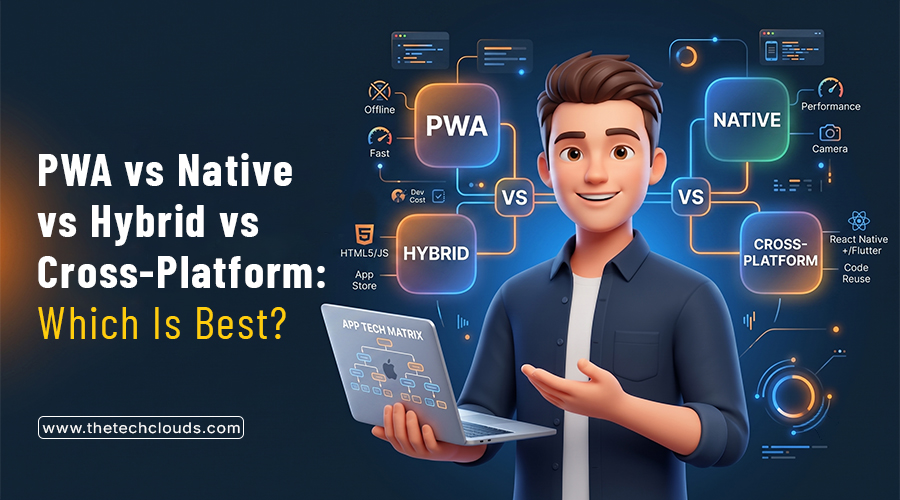
Mobile App Development in 2026: PWA vs Native vs Hybrid vs Cross‑Platform – Which Is Best for Your Business?
Ask five developers about the best way of building mobile apps in 2026. There’s no doubt in this that you’ll get five different answers. Some swear by natives, whereas others...
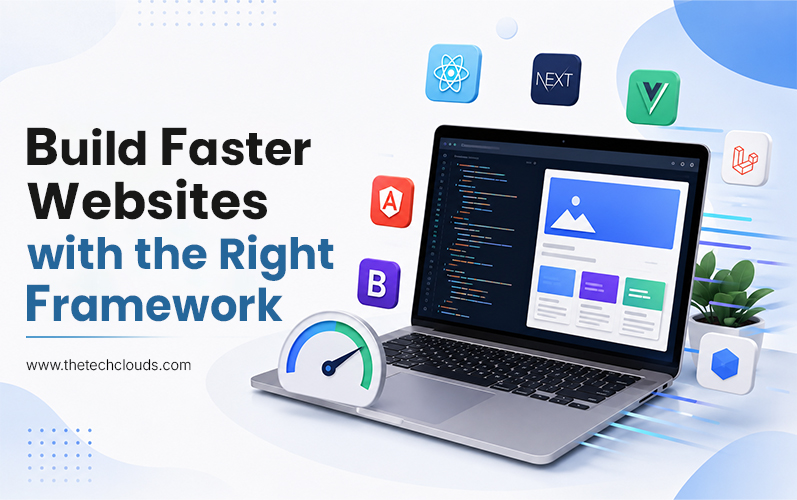
Why Your Website Is Slow and How the Right Development Framework Solves It
Ever clicked on a site and just... left before it even loaded? You're not alone, and neither is your website if it's doing the same thing to its visitors. Mainly,...
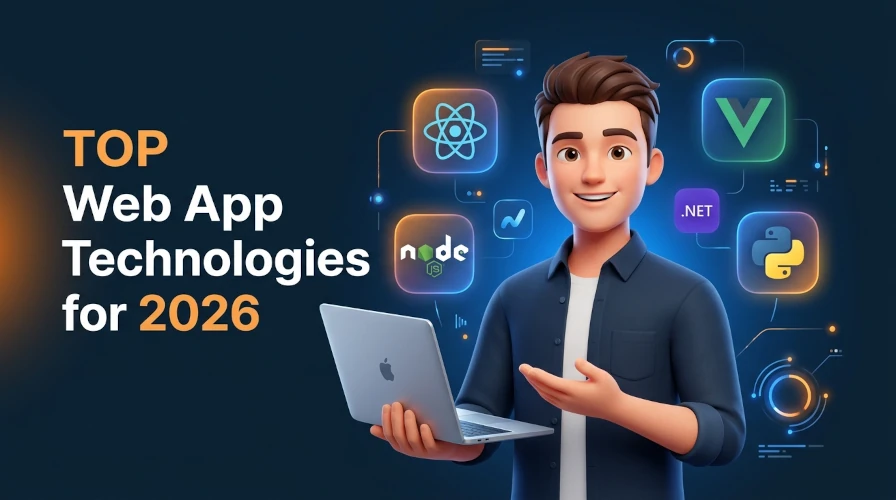
Best Technologies for Web Application Development in 2026
Web application development has changed a lot even in the last couple of years. Frameworks keep moving; people expect pages to load within a second, and sticking with outdated tools...