


Python AI Chatbot: A Comprehensive Guide to Build Your Smart Assistant
In today’s digital landscape, Python AI Chatbot has gained wide popularity by providing wide-ranging services in various domains like customer service, e-commerce, and various other industries. Utilizing Artificial Intelligence and Natural Processing Languages (NLP), these chatbots imitate natural human languages and proficiently respond to queries in a humanoid form. Their incorporation in business aids in amplifying customer involvement, mitigating the business overheads, and enhancing seamless operation. Python is easy, simple, and understandable, making it an efficient programming language for the development of AI chatbots. Using its wide array of libraries and frameworks developers can effectively build quick-witted chatbots with Natural Processing Language (NLP) features. This is a comprehensive guide where we will discuss some proven ways of creating chatbots that cover crucial libraries, approaches, and frameworks.
Different Types of AI Chatbots
Chatbots are mainly classified into two types:
Rule-Based Chatbots
These chatbots are simple and work well on prearranged protocols and set phrases, which follow the decision tree approach and are well-fitted to deal with easy jobs like replying to frequently asked questions or scheduling appointments.
AI-Powered Chatbots
These chatbots employ machine learning and NLP methods to produce answers dynamically, in a human-like manner. They thrive day by day by interacting with various users and understanding their intent. These chatbots are used for navigating settings, participating in deeper-level conversations, assisting clients virtually, and managing their problems in various business fonts.
Essential Python Libraries for Chatbot Development
Python is the most simple and reliable language to build a robust chatbot as it has an extensive collection of libraries and frameworks that can be used in machine learning. Some of the Python libraries that are conducive to developing AI chatbots are as follows:
1. Chatter Bot
Chatterbot is one of the most crucial libraries of Python that helps in building conversational agents that can gain understanding from previous engagements. It uses a machine learning algorithm for apt answers and consistently excels in each dialogue. Chatterbox has some special attributes these are:
● Uses prepared conversational list.
● Robotic reply formulation.
● Seamless incorporation of Django and Flask.
2. NLTK (Natural Language Toolkit)
NLTK is a versatile arsenal that operates on the human language set in detail with the help of NLP features like tokenization, stemming, and named entity recognition. Special attributes of NLTK are:
● Word processing software for data hygiene.
● Inspection of emotion.
● Labelling and grouping of parts of speech.
3. SpaCy
This is the most refined NLP library that is crafted for enhancing the overall performance of the chatbots, by utilizing scripted text prediction models. Some specific features of SpaCy are:
● Abrupt tokenization and entity identification.
● Grammatical analysis for creating sentences.
● Cognitive incorporation of computation.
Step-by-Step Guide to Building a Chatbot
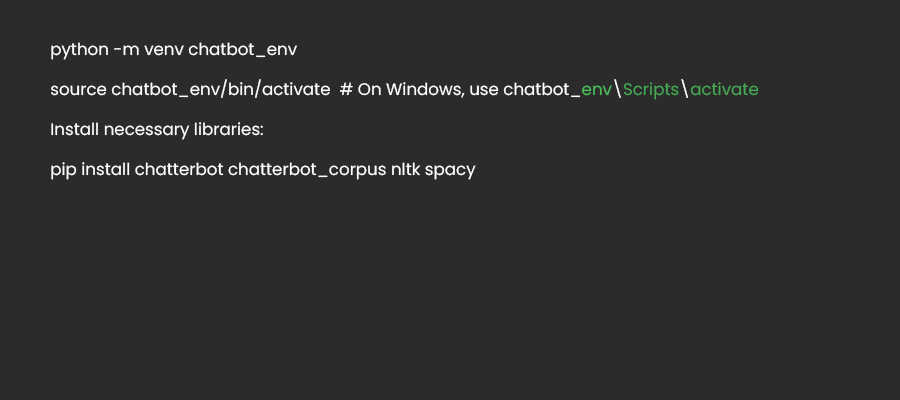
Setting Up the EnvironmentInstall Python and create a virtual environment:
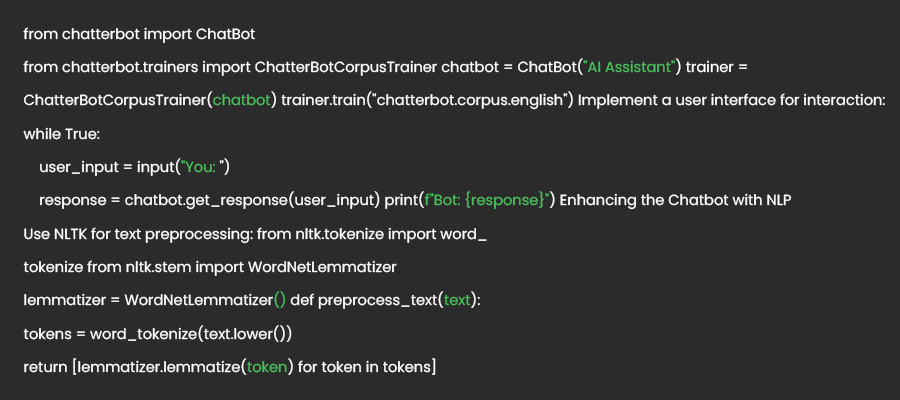
Creating a Simple Chatbot with ChatterBot Initialize a chatbot instance:
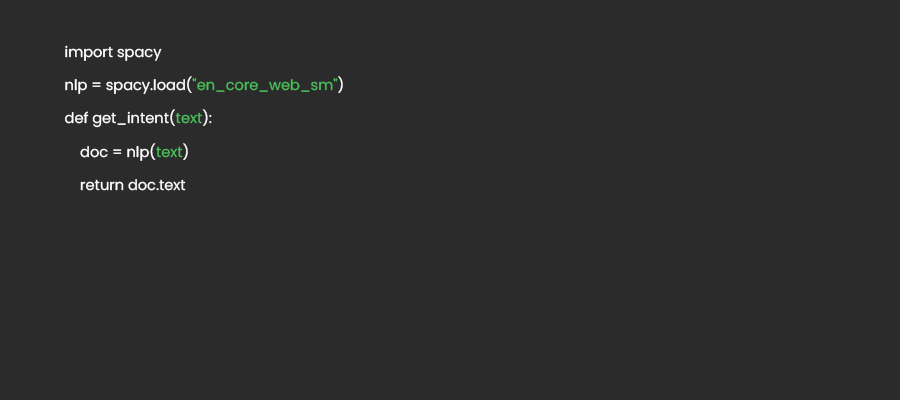
Implement intent recognition using SpaCy:
Handle the circumstances for prolonged conversations by acquiring knowledge from past interactions and behave accordingly.
Testing and Deployment
Testing the Chatbot
Unit Testing: Each NLP component tests meticulously and guarantees an accurate befitted reply.
User Testing: Accumulate the opinions and reviews from real users and curate appropriate answers so that it can proceed to extensive conversations.
Deployment of the Chatbot
Deploy the chatbot as a web application using Flask or Django:
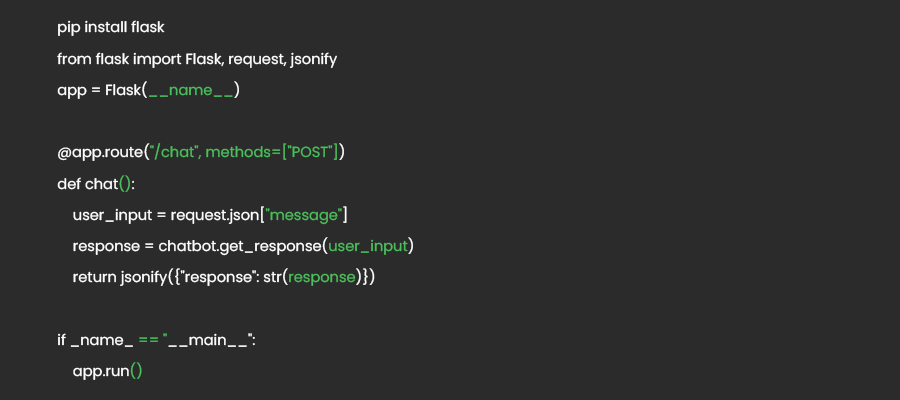
Integrate the chatbot with messaging platforms like WhatsApp or Slack using APIs.
Challenges and Best Practices
Common Challenges
Dealing Obscure Inputs:
● Implement fallback responses when the chatbot is uncertain.
● Ensuring Data Privacy:
● Secure user data with encryption and comply with privacy regulations.
Best Practices
Continuously Improve Training Data:
● Regularly update datasets to enhance chatbot accuracy.
● Monitor User Interactions:
● Use analytics to track chatbot performance and identify areas for improvement.
Get Custom-Built Solutions for Python AI Chatbots!
Final Thoughts
To build AI chatbot with Python, developers need to follow various procedures and techniques by leveraging its powerful frameworks and libraries. Handling challenges efficiently, developers built a sturdy and appealing conversational assistant using Python AI chatbot frameworks 2025. Businesses can leverage this Python AI chatbot to enhance client support, automate tasks, and boost user engagement. Python offers a platform that provides an easy coding structure to design the best AI-powered Voice and virtual assistants. Hire proficient Python development services, to build the most effective chatbots be-spoken to your needs. Moreover, sinking money in Python app development services also boosts the productivity and expandability of your automated projects.

Frequently Asked Questions
What is a chatbot?
A chatbot is an AI-powered program designed to simulate human-like conversations. It automates interactions, improving customer service and engagement. Businesses use chatbots in websites and apps for efficiency. Python app development enables seamless chatbot integration with various platforms for a better user experience.
Can NLTK and spaCy be used together in a chatbot project?
Yes, NLTK and spaCy can be combined to enhance chatbot functionality. NLTK excels in statistical NLP, while spaCy is efficient in deep learning-based processing. Using both creates a powerful Python AI chatbot capable of advanced text analysis, sentiment detection, and natural conversation handling.
Recent Posts





Related Blogs

AI App Development Trends 2027: What Businesses Need to Know
A CTO opens two dashboards side by side. One is his competitor's; the other is his own. The competitor's page was built on an AI system that tracks customers' order...

How to Speed Up Your WordPress Site: The Ultimate Optimization Guide
You have gone above and beyond to build your WordPress site, but when a visitor arrives, the loading wheel starts spinning. First 3 seconds gone, then five and so on....

App Development Cost by Country in 2027: USA vs UK vs India
You may want a web app or mobile app with almost the same features, but you’re still getting three different quotes from three different agencies in three different countries. App...

How to Hire Dedicated Developers: A Complete Guide from Scratch
Most businesses don't plan to outsource. It happens when your internal teams can’t cope with the demands of the existing market. Suppose a project that requires something which your present...
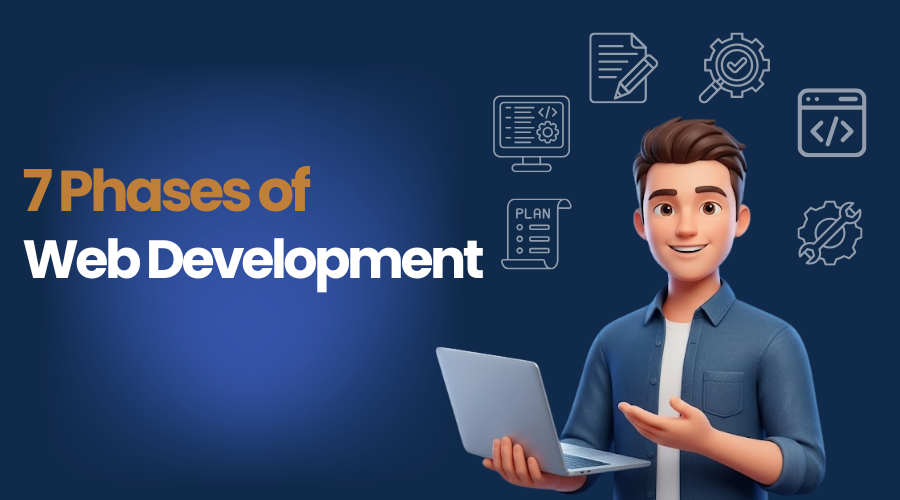
The 7 Phases of Web Development: From Idea to Launch
Anyone can think of a website design while working late at night or doing a job at dawn, but the problem hits when it comes to turning it into reality....
Mobile App Development in 2026: PWA vs Native vs Hybrid vs Cross‑Platform – Which Is Best for Your Business?
Ask five developers about the best way of building mobile apps in 2026. There’s no doubt in this that you’ll get five different answers. Some swear by natives, whereas others...
Why Your Website Is Slow and How the Right Development Framework Solves It
Ever clicked on a site and just... left before it even loaded? You're not alone, and neither is your website if it's doing the same thing to its visitors. Mainly,...
Best Technologies for Web Application Development in 2026
Web application development has changed a lot even in the last couple of years. Frameworks keep moving; people expect pages to load within a second, and sticking with outdated tools...