


Native vs Hybrid Mobile Apps: Which Is the Right Choice for Your Business in 2026?
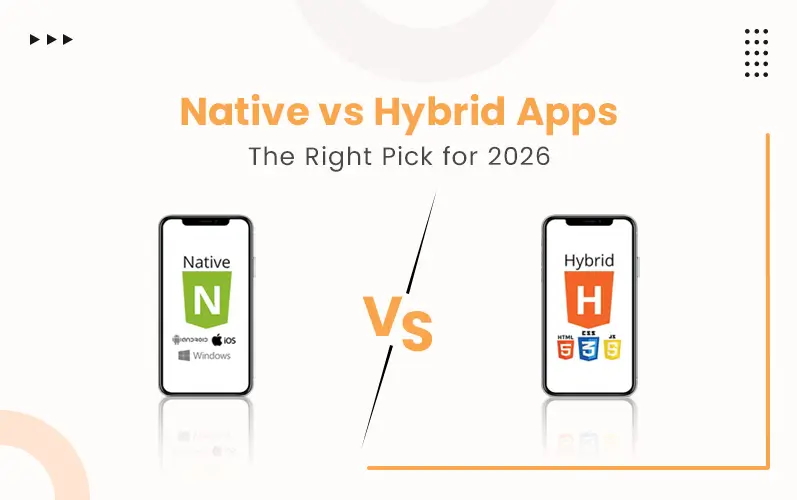
In 2026, the mobile app usage will boom even more! People now spend 89% of their smartphone time using apps. These smartphone users spend hours every day inside apps that entertain, educate, and connect them to businesses faster than ever before. If your business isn’t delivering a seamless app experience, you’re missing out on where your customers are.
But here’s the catch.
Building a scalable mobile app development strategy that drives user growth starts with one core decision — should you go native or hybrid? As we know, these two have become emerging technologies in mobile apps. Native apps have long been the gold standard for performance and user experience. Hybrid apps, on the other hand, promise something equally compelling: speed to market and cost efficiency.
It’s about aligning your app strategy with your business vision, in areas like scalability, budget, and the kind of experience you want your users to remember. As your right mobile app development company, this blog will guide you to make the best choice.
Key Takeaway
- Native apps deliver the best performance, user experience, and scalability — ideal for businesses that prioritize quality, speed, and reliability.
- Hybrid apps offer faster development, lower costs, and cross-platform reach — making them ideal for startups or companies looking to test new ideas quickly.
- Cross-platform frameworks like Flutter and React Native sit between native and hybrid, offering near-native performance from a single codebase.
- The cost and ROI depend on business goals: native for long-term user retention and brand loyalty, hybrid for speed-to-market and efficiency.
- The right choice depends on your vision — align your app strategy with your audience, budget, and growth goals to build for the future confidently.
- In 2026, choose an option based on your industry style and current trends.
Quick Answer: Native vs Hybrid (WebView) in 2026
If you need strong performance, smooth animations, or deep OS features (payments, biometrics, complex gestures), native is still the safe bet.
If you’re building a simple content or form‑driven app, have a very tight budget, and just need basic device access (camera, GPS, push), a hybrid/WebView app can work, but expect trade‑offs in speed, UX polish, and long‑term scalability.
Native and Hybrid Mobile App: Understand the Basics
What Is a Native App?
Native apps are built specifically for a single platform, typically iOS or Android. Developers build a native app using programming languages tailored for that system.
- Swift or Objective-C for iOS
- Kotlin or Java for Android
What Is a Hybrid App?
Not all “hybrid” apps are the same. This is where most comparisons go wrong.
Traditional hybrid apps (apps that are built with Iconic or Cordova) wrap a website inside a WebView container. The app is essentially a browser window dressed up as a mobile app. Performance is limited because the UI is rendered in HTML/CSS, not native components. Gartner also forecasts that by 2025, more than 60% of large businesses will rely on hybrid/low‑code approaches for significant portions of their app portfolio, reflecting the push for speed and cost control.
Modern cross-platform frameworks like Flutter and React Native work differently. They compile native code or use native UI components directly- which is why they deserve their own category.
The Practical Breakdown:
| Development Approach | Key Benefits |
|---|---|
| Native (Swift/Kotlin) | Maximum Performance, Full Platform Access. |
| Cross-Platform (Flutter/React Native) | Near-Native Performance, One Codebase, Moderate Cost. |
| Hybrid/WebView (Ionic, Cordova) | Widest Reach, Easiest Web-to-Mobile Transition, Lowest Performance Ceiling. |
Native and Hybrid Mobile App Development Difference: In-depth Analysis
Performance
| Metric | Native | Flutter | React Native | Ionic/WebView |
|---|---|---|---|---|
| Cold Launch Time | 0.8–1.2 sec | 1.1–1.5 sec | 1.4–2.0 sec | 2.0–3.5 sec |
| UI Frame Rate | 60–120 fps | 60–120 fps | 60 fps | 30–60 fps |
| Memory Overhead | Baseline | +10–15% | +15–25% | +30–50% |
| Battery Drain (1hr) | Baseline | +5–8% | +8–15% | +20–35% |
User Experience
| Aspect | Native | Flutter | React Native | Ionic/WebView |
|---|---|---|---|---|
| UI Consistency | Perfect Platform Match | Pixel-Perfect, Custom Engine | Near-Native Components | Web-Based, Feels Generic |
| Animation Smoothness | Seamless | Seamless | Good | Noticeably Laggier |
| Gesture Recognition | Full Native Support | Full Support | Good | Limited |
| Offline Experience | Full | Full | Full | Partial |
| Accessibility Support | Complete (iOS/Android APIs) | Good | Good | Basic |
Development Environment
| Aspect | Native | Flutter | React Native | Ionic/WebView |
|---|---|---|---|---|
| Primary Language | Swift/Kotlin | Dart | JavaScript | HTML/CSS/JS |
| IDE | Xcode/Android Studio | VS Code/Android Studio | VS Code | VS Code |
| Debugging Tools | Best-in-Class | Strong | Good | Basic |
| Hot Reload | No | Yes | Yes | Yes |
| SDK/API Access | Full | Near Full | Near Full | Limited |
| Team Learning Curve | High | Moderate | Low (if React Background) | Low |
Security and Updates
| Aspect | Native | Flutter | React Native | Ionic/WebView |
|---|---|---|---|---|
| Platform-Level Security | Full (Keychain, Keystore) | Good | Good | Weak |
| Biometric Authentication | Native, Seamless | Supported via Plugins | Supported via Plugins | Limited |
| Code Obfuscation | Strong | Strong | Moderate | Weak |
| OTA (Over-the-Air) Updates | No (Store Only) | No (Store Only) | Yes (via CodePush) | Yes |
| Vulnerability Surface | Smallest | Small | Moderate | Largest (WebView Exposed) |
| Compliance Readiness (HIPAA/PCI) | Highest | Good | Good | Requires Extra Hardening |
Scalability
| Aspect | Native | Flutter | React Native | Ionic/WebView |
|---|---|---|---|---|
| Codebase Maintenance | Two Separate Codebases | One Codebase | One Codebase | One Codebase |
| Adding New Features | Built Twice (iOS + Android) | Built Once | Built Once | Built Once |
| Team Scaling | Requires iOS + Android Developers | One Flutter Team | One JavaScript Team | One Web Team |
| Performance Under Load | Best | Very Good | Good | Degrades Noticeably |
| Enterprise Readiness | Highest | High | High | Moderate |
| Multi-Platform Expansion | Mobile Only | Mobile + Web + Desktop | Mobile + Partial Web | Mobile + Web |
Development Time
| Phase | Native | Flutter | React Native | Ionic/WebView |
|---|---|---|---|---|
| Initial Setup | 1–2 Weeks | 3–5 Days | 3–5 Days | 1–3 Days |
| MVP Build | 4–6 Months | 2–3 Months | 2–3 Months | 1–2 Months |
| Full Product Launch | 6–9 Months | 3–5 Months | 3–5 Months | 2–4 Months |
| Feature Updates | Slower (Built Twice) | Fast | Fast | Fastest |
| Bug Fixes | Platform-Specific | Single Fix | Single Fix | Single Fix |
| Time Saved | Low | Approx. 40% Faster | Approx. 40% Faster | Approx. 55% Faster |
Conversion Rates and Customer Engagement
| Metric | Native | Flutter | React Native | Ionic/WebView |
|---|---|---|---|---|
| App Store Rating (Avg.) | 4.5+ | 4.3–4.5 | 4.2–4.4 | 3.8–4.2 |
| Push Notification Reliability | Highest | High | High | Moderate |
| Session Duration | Longest | Long | Long | Shorter |
| Crash Rate | Lowest | Low | Low–Moderate | Higher |
| Retention Rate (30-Day) | Best | Very Good | Good | Below Average |
| Checkout/Form Completion | Highest | High | High | Moderate |
Development Cost and ROI Comparisons
| Cost & ROI Factor | Native App | Cross-Platform (Flutter/RN) | Hybrid/WebView (Ionic) |
|---|---|---|---|
| Initial Development Cost | $80,000–$300,000+ per Platform | $40,000–$150,000 Total | $15,000–$60,000 Total |
| Development Timeline | 4–9 Months | 2–5 Months | 1–3 Months |
| Team Size Required | 4–8 Developers | 2–4 Developers | 1–3 Developers |
| Yearly Maintenance | $20,000–$60,000 / Year | $10,000–$30,000 / Year | $5,000–$15,000 / Year |
| 3-Year Total Cost (Mid-Range) | $180,000–$480,000 | $70,000–$240,000 | $30,000–$105,000 |
| ROI Profile | Long-term retention and brand loyalty; best for performance-driven products. | Strong multi-platform ROI; breaks even in 12–24 months. | Fastest break-even (6–12 months); best for MVPs and internal tools. |
Which Should You Choose by Industry
Generic advice doesn’t help. Here’s the breakdown by sector:
| Industry | Recommended Approach | Reason |
|---|---|---|
| Fintech/Banking | Native | Biometric authentication, security enclaves, strict compliance requirements, and zero tolerance for lag. |
| Healthcare | Native | HIPAA compliance, medical device integration, real-time sensor data, and regulatory audit trails. |
| E-Commerce | Flutter | Strong performance, consistent UI across platforms, faster development, and cost efficiency. |
| Startups/MVPs | React Native or Flutter | Single codebase, faster iteration, and lower burn rate while validating product-market fit. |
| Enterprise SaaS | Flutter or React Native | Depends on the existing tech stack; Flutter for greenfield projects, native when deep OS integration is required. |
| Gaming | Native or Unity | Frame rate and GPU access are critical; WebView and most cross-platform frameworks have limitations. |
| Media/Streaming | React Native or Native | React Native meets most requirements; native is preferred for DRM support and hardware video decoding. |
| Logistics/Fleet Management | Flutter | Excellent map rendering performance, offline capabilities, and cross-device consistency for field operations. |
2026 Trends Changing the Decision
On-Device AI
Data from ExplodingTopics, shows that smartphone users spend more than 88% of their mobile time inside apps rather than mobile websites, making app performance a key business factor. Apple’s Core ML and Google’s ML Kit have made on-device AI interface a standard expectation. Real-time translation, image recognition, video processing, and personalization without a server round-trip.
- Native apps access these frameworks directly.
- Flutter has grown ML Kit support.
- React Native requires additional bridging.
If your app’s competitive advantage is AI-powered features, native gives you first access to every new model Apple and Google Ship.
5G Capabilities
5G doesn’t just mean faster downloads. Network slicing, ultra-low latency, and edge computing open new app categories- real-time collaboration, AR streaming, live telemedicine. Apps that need to exploit 5G’s latency advantages (under 10ms) need native-level network API access.
Cross-platform frameworks are catching up, but native remains ahead for cutting-edge 5G use cases. According to a recent survey, Flutter and React Native consistently rank among the most-used cross-platform mobile development frameworks worldwide.
Foldables and Wearables
Samsung’s foldable line, Apple’s continued wearables expansion, and the growth of large-screen Android tablets are changing UI expectations. Adaptive layouts that respond to screen state changes, hinge angles, and form factor switching require OS-level APIs that native handles natively.
Research from GitHub Octoverse shows that Flutter remains one of the fastest-growing open-source mobile development technologies based on repository activity and developer adoption.
Quick Decision Guide: Native Vs. Hybrid
| Consideration | Go Native | Go Hybrid |
|---|---|---|
| Budget | Higher budget, $80K+ per platform | Tighter budget, single codebase keeps costs down |
| Timeline | Can wait 4–9 months | Need to launch in weeks, not months |
| Performance needs | Demands top-tier speed, animation, or hardware access | Good performance is enough, near-native is fine |
| Team size | Have or can hire iOS + Android developers | Small team, one codebase to maintain |
| App complexity | Complex, hardware-heavy, or compliance-driven (fintech, healthcare) | Simpler features, content or catalog-driven apps |
| Testing a new idea | Not ideal for fast validation | Best fit — cheap, quick MVP to test product-market fit |
Have an app idea but unsure where to start? Let’s bring it to life together!
Final Thoughts: Making the Right Choice for 2026
In the fast-evolving digital landscape of 2026, your mobile app development strategy. The path you choose today determines how your brand connects, scales, and stays relevant in a market where user expectations evolve faster than technology itself.
Native apps remain the gold standard for businesses that demand top-tier performance, seamless UX, and long-term scalability. They deliver precision and power, the kind that high-performance brands and enterprise-level products rely on. Hybrid apps, on the other hand, redefine accessibility. They offer speed, affordability, and flexibility, making them the go-to solution for companies aiming to move fast, test new ideas, or expand reach without overextending budgets.
Choose the approach that not only fits your timeline and resources but also propels your brand into the future with confidence and clarity. Ready to build the right app for 2026? Partner with us! Our mobile app development expert team ensures your project is built with scalability, performance, and ROI in mind. Get a free consultation now!

Frequently Asked Questions
Which tech stacks are used in Native app vs. hybrid app development?
In native app development, developers use platform-specific technologies such as Swift and Objective-C for iOS, and Kotlin or Java for Android. These languages are optimized for their respective platforms, providing superior performance, smoother user experiences, and deeper integration with device hardware and features.
On the other hand, hybrid app development relies on frameworks such as React Native, Flutter, and Ionic, which enable the building of apps for multiple platforms using a single codebase. This approach helps businesses save both development time and costs while maintaining consistent functionality across iOS and Android.
Why do enterprises prefer native app development?
Enterprises often choose native development because it delivers the highest performance, reliability, and scalability. These are essential for handling large user volumes and complex data. Native apps also integrate better with device features like GPS, camera, and push notifications, providing a smoother user experience. For industries such as finance, healthcare, or logistics, where security and responsiveness are critical, native apps offer tighter control over updates and long-term maintenance.
How should you compare mobile app development costs?
When comparing mobile app development costs, consider not only the upfront development budget but also long-term factors like maintenance, scalability, and feature expansion. Native apps typically incur higher initial costs due to the need for separate builds for iOS and Android, whereas hybrid apps reduce costs through shared codebases. However, performance, complexity, and desired user experience should guide your choice, not price alone.
Do you need a clear cost breakdown tailored to your business goals? Contact our team for a personalized cost analysis of your mobile app development project. We’ll help you identify the most efficient and scalable approach for your app idea.
Is Flutter native or hybrid?
Flutter is neither fully native nor hybrid. It sits in a unique category. It is a cross-platform (hybrid) framework that uses the Dart programming language and compiles to native machine code. In simple words, it’s a cross-platform framework that provides near-native performance.
Can a hybrid app replace a native app?
If your primary focus is content, transactions, or user experience, then hybrid or cross-platform solution can replace a native app while reducing development costs and maintenance efforts.
But if performance, hardware access, or platform-specific capabilities are central to your product, then native development is still the preferred approach.
Which is better for gaming apps?
For serious gaming apps where 3D, high-quality graphics, or speed matters, choose Native. But for 2D games, puzzles, or multiplayer games with simpler graphics- Cross-platform works best. Honestly, hybrid is the least recommended option for gaming apps due to performance lagging.
What is the maintenance cost difference over 3 years?
Over a 3-year period, cross-platform and hybrid apps can save up to 30-50% of maintenance costs. The maintenance costs of native apps are quite high.
Can you migrate from hybrid to native later?
Migrating from hybrid to native is entirely possible, but it should be planned as a redevelopment project. Businesses should generally expect to spend 60 to 80% of the original development cost on a full migration, depending on the app’s complexity and feature set.
Can hybrid apps access cameras, GPS, notifications, and other device features?
Yes. Modern hybrid and cross‑platform frameworks (React Native, Flutter, Ionic with Capacitor) expose native device features through plugins/bridges.
You can access the camera, GPS, push notifications, biometrics, and more, though very new or highly specialized OS APIs may arrive a bit later than in pure native.
Recent Posts






Related Blogs
PWA vs Native Apps: Which Is Better for Modern Businesses?
Your customers order everything through their phones. So, serving them means your app should be highly mobile-responsive. To meet their requirements and enhance user satisfaction, you have to make a...

How Much Does Custom App Development Cost?
A striking app can be the face of every business. An app with smooth functions, minimalist designs, and interactive features can attract many customers. Businesses can use this approach to...
A Guide into Cross Platform App Development
The demand for apps that work seamlessly across multiple platforms is growing. The cross-platform app development market is projected to surge from $15.67 billion in 2025 to $2.60 billion by...
How Much a Custom Logistic App Development Costs?
Digital transformation is no longer optional; it's obligatory in today's fast-evolving supply chain environment. Recent estimates put the global logistics market at about $10.17 trillion in 2024, growing to roughly...

How to Choose the Right Mobile App Development Company: A Step-by-Step Guide
In today's digital landscape, the development of mobile applications has become essential for businesses of all sizes. From startups to large enterprises, companies rely on mobile apps to expand their...
Significance of a Landing Page in Driving App Success: 5 Key Insights
Getting leads but stagnating sales numbers has become a crucial problem for most small brands. Do you know why? SME brands do not invest in the right mobile app landing...