


PWA vs Native Apps: Which Is Better for Modern Businesses?
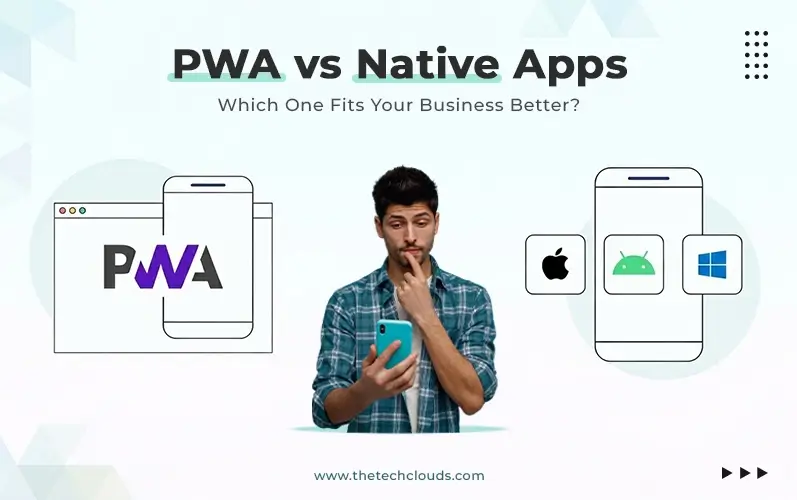
Your customers order everything through their phones. So, serving them means your app should be highly mobile-responsive. To meet their requirements and enhance user satisfaction, you have to make a critical decision: Progressive Web App or a Native App. Which will help the business to enhance its digital presence?
The answer simply relies on your business goals, budget, and audience. Undoubtedly, they both are great choices for app development. But they both come with their own strengths and weaknesses.
So, let’s learn their pros and cons along with their key differences. This guide breaks down everything in simple language so that you can make an informed decision with more clarity and confidence.
What are Progressive Web Apps (PWAs)?
Progressive Web Apps (PWAs) are technically websites that function like mobile apps. You don’t need to download it from any app store, so it won’t take up your extra space. Still, it can send notifications. You open it in a browser, but it feels like a real app. You don’t rely on your internet to run it all the time. It runs directly from the web of any device.
Another important benefit of PWA is its universal accessibility, using a single link. You can search it on any search engine and get the results from there. PWAs are a highly powerful and cost-effective approach. It delivers an app-like feeling to a large community.
Pros:
Cross-Device Compatibility:
Like other apps, developers build PWAs using HTML, CSS, and JavaScript. But its functional design is quite different, giving it an edge in adapting to different digital screens. It looks the same on all phones, tablets, and desktops.
Offline Accessibility:
Unlike other apps, it doesn’t need an internet connection to run. You can access it in offline mode directly through web browsers. No hassles. You don’t have to download them from the App Store. Collaborate with a progressive web app development company to build them.
Cost-Effective:
One codebase runs through multiple platforms. That’s why it has less development and maintenance costs. Choose a trusted web application development services to get PWAs within budget. An expert team fixes bugs and takes care of your update headaches, too.
Better Discoverability:
PWA has a competitive edge in SEO. They can be easily indexed by search engines and available whenever you need them.
Fast & Lightweight:
PWAs do not heavily rely on the internet. It is 3X times faster than regular mobile apps. Developers deploy them directly from the server. So, fast updates even on slow internet connections. Users get the latest features, improving satisfaction every time.
Cons:
Limited Device Features:
In PWAs, sometimes you feel restricted. This is because it cannot access the camera, Bluetooth, geolocation, and certain sensors.
Weaker on iOS:
Apple has fewer PWA features than Android, which makes you feel constricted every single time.
Performance Issues:
However, PWAs uploaded with modern features still lack performance. The speed and responsiveness you encounter in native apps are way better than those in PWAs.
No App Store Presence:
Native apps have access to app store features and distribution channels. PWAs fall short here. Even they miss millions of users who scroll the app store and discover new apps.
Low Market Awareness:
Many people use PWAs every day. But still have very little knowledge about this. They are only aware of the conventional approach of downloading apps from the App Store and using them. That’s why educating them about PWA’s benefits and features is essential. This step will increase the adoption of PWAs.
What are Native Apps
Native apps are mobile applications, either built for iOS or Android. You can download them from the App Store or Google Play Store. Many people confuse Native vs Hybrid Mobile Apps. But always remember, Native apps are built using specific programming languages, such as Kotlin or Java for Android apps and Swift for iOS applications.
As native apps are built especially for a specific system, they run directly on the device. It can use all the phone’s features and has direct access to system-level APIs and hardware components, providing you with the smoothest possible experience.
Pros:
Full Access to Device Features:
Native apps are tightly connected with the operating system. That’s why it can use mobile GPS, scanners, Bluetooth, cameras, sensors, and every other mobile feature without limits.
Best Performance:
If the native app is for Android, it uses programming languages like Kotlin or Java. And when it’s for iOS, it is built using Swift or Objective-C. Moreover, it leverages the full potential of the device’s underlying hardware and OS. Because of this specificity, it can deliver a smoother experience than any other app type.
App Store Presence & Discoverability:
People search for new apps from the App Store. This means native apps are highly discoverable. App Stores provide star ratings and user reviews. These features help build trust and confidence among customers. Businesses that invest in mobile app development services benefit from these App Store opportunities.
Better User Experience:
Native apps are created for specific platforms. It complies with all UI/UX guidelines and design strategies. Moreover, you can use them offline with smooth navigation and better user features. That’s why it provides the most gratifying user experience.
Stronger Security:
In the healthcare and financial sectors, security is the primary concern. If they want to invest in an application, they should allocate their funds to mobile app development services, especially for native apps. Why? Native apps offer high security and strong compliance standards.
Cons of Native Apps:
Development &v Maintenance:
Native apps require separate codebases for different platforms. That means it’s quite difficult to develop. Partnering with a react native app development company to help you maintain these codebases across specific platforms is quite complex.
Slower Updates:
Every update is dependent on the team. The apps cannot update themselves automatically, like PWAs. The most critical issue is that every update has to go through the App Store’s review process, which imposes significant restrictions. Thus, it takes a long time to complete it.
Cross-Device Compatibility Problems:
Every OS and platform has its own level of complexity. When you build native apps, you have to maintain two separate codebases. It requires fragmentation to ensure compatibility across different platforms and OS versions. This means more intricate and enduring tasks, requiring greater effort and costs. Hire a dedicated React.js developer to reduce your workload.
Expensive to Build:
React native app development is required to create Native apps. Separate codebases for specific platforms, which means testing and optimization at every step. This step increases the complexity of the development tasks, doubling both time and cost, which is nearly $100,000 to $500,000 on average.
Head-to-Head Comparison Table
| Features | PWAs | Native Apps |
|---|---|---|
| Cost | Low | High |
| Feature Access | Limited | Full |
| Performance | Good | Excellent |
| App Store Presence | Partially | Fully |
| Works Offline | Partially | Fully |
| Update Speed | Instant | Slow, depends on App Store reviews |
| Cross-Platform | Yes | No (Separate Builds) |
| Discoverability (SEO) | High | Low |
| Development Time | Fast | Slow |
| Best For | Content, eCommerce, Speed | Games, Banking, and Heavy Apps |
Final Verdict
Going through this article makes one thing clear. No one is a single winner here. Both wins according to your requirements. Choose PWAs if you want something fast, affordable, and accessible to everyone without downloads. It is great for news sites, e-commerce stores, blogs, and service businesses.
Choose a Native App if you want top performance, deep-level integration, and a strong business presence through the App Store. It is the right choice for gaming, finance, and healthcare, and feature-heavy applications. Many businesses are now choosing both- a PWA for broad reach and a native app for power users. That is often the smartest move.
If you’re still confused, let The Tech Clouds help you choose between PWS vs. Native apps. We are a renowned mobile app company, building top-grade Native apps. We also provide web application development services, offering high-quality PWAs. So, whatever you need, whether it’s Native or PWAs, The Tech Clouds (TTC) is here to help you. To experience the difference in the digital landscape, let’s connect with us today.

Frequently Asked Questions
Is a PWA cheaper than a native app?
Yes. A PWA needs only one codebase for all devices. A native app requires separate builds for iOS and Android, which takes more time and costs more money.
Can a PWA replace a native app for my business?
For many businesses, yes. If you do not need advanced device features or app store presence, a PWA can do the job at a fraction of the cost.
Which is better for e-commerce: a PWA or a native app?
PWAs work very well for e-commerce. They load fast, work on all devices, and require no download. Many big brands successfully use PWAs for their online stores.
Does TTC build both PWAs and native apps?
Yes. The Tech Clouds offers both web and mobile app development services, helping businesses choose and build the right solution for their needs.
Recent Posts






Related Blogs

AI App Development Trends 2027: What Businesses Need to Know
A CTO opens two dashboards side by side. One is his competitor's; the other is his own. The competitor's page was built on an AI system that tracks customers' order...

How to Speed Up Your WordPress Site: The Ultimate Optimization Guide
You have gone above and beyond to build your WordPress site, but when a visitor arrives, the loading wheel starts spinning. First 3 seconds gone, then five and so on....
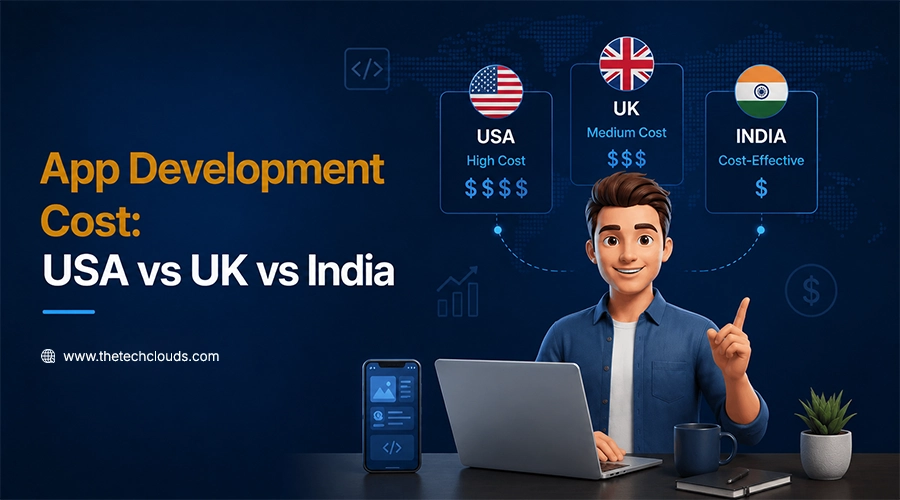
App Development Cost by Country in 2027: USA vs UK vs India
You may want a web app or mobile app with almost the same features, but you’re still getting three different quotes from three different agencies in three different countries. App...

How to Hire Dedicated Developers: A Complete Guide from Scratch
Most businesses don't plan to outsource. It happens when your internal teams can’t cope with the demands of the existing market. Suppose a project that requires something which your present...

The 7 Phases of Web Development: From Idea to Launch
Anyone can think of a website design while working late at night or doing a job at dawn, but the problem hits when it comes to turning it into reality....
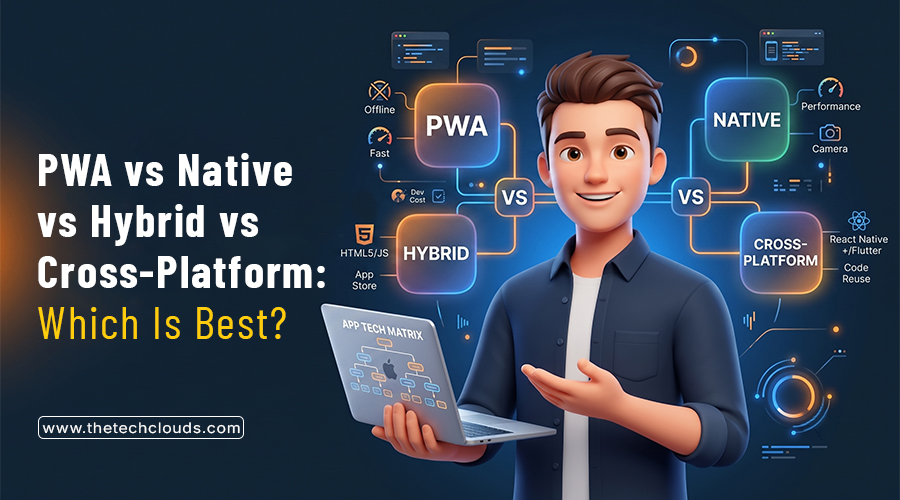
Mobile App Development in 2026: PWA vs Native vs Hybrid vs Cross‑Platform – Which Is Best for Your Business?
Ask five developers about the best way of building mobile apps in 2026. There’s no doubt in this that you’ll get five different answers. Some swear by natives, whereas others...
Why Your Website Is Slow and How the Right Development Framework Solves It
Ever clicked on a site and just... left before it even loaded? You're not alone, and neither is your website if it's doing the same thing to its visitors. Mainly,...
Best Technologies for Web Application Development in 2026
Web application development has changed a lot even in the last couple of years. Frameworks keep moving; people expect pages to load within a second, and sticking with outdated tools...