


Python vs. JavaScript: A Business-Centric Guide to Selecting the Ideal Tech Stack
Python and JavaScript are the two dominant languages in the coding world. Each of them carries their own distinct features. Python is a modern scripting language in the tech world. Whereas JavaScript is the classic but clean scripting language.
These two prominent high-level languages are easy to read and write. Due to this they become highly influential and thrive in different domains.
According to Statista, over 62% of developers reported using JavaScript in 2024. While Python usage was at around 49%. This data shows their contributions in developing enterprise-based digital products. But choosing between these two options often creates confusion.
This blog sheds light on every key point and disparity that clears your never-ending confusion. In the context of Python vs. JavaScript, getting a crystal-clear idea about all the strengths and weaknesses of each language helps you choose the right tech stack.
Introduction to Python
Python is a versatile, high-level programming language known for its simplicity and readability. Its wide ecosystem supports web development, automation, data analysis, AI, and machine learning. Its powerful capabilities make it the most preferred choice for modern businesses. Companies choose Python due to various reasons. It accelerates development, reduces technical complexity, and ensures long-term scalability.
Python is used to develop server-side elements of applications. It has an extensive library, a strong community, and cross-platform support. This is what makes it a preferred choice in building scalable and efficient software. If you’re looking to build powerful digital solutions, then it’s the right time to hire Python developers. They build digital applications with speed and reliability and strengthen your tech capabilities.
Key Features:
- Highly scalable for small scripts to complex systems.
- Automated memory management for simplified development.
- Excellent integration with data science and AI tools.
- Supports multiple programming paradigms, including OOP and functional programming.
Introduction to JavaScript
JavaScript is one of the most essential languages for modern web and application development. It powers everything from interactive interfaces to scalable backend systems. Its extensive ecosystem makes it ideal for building dynamic digital solutions. JavaScript is widely renowned for its flexibility and speed.
JavaScript is a scripting language that comes with drop-down menus and animations. It also provides mouseover actions and real-time updates. This makes it favorable for making dynamic web content. Once it was just created to develop front-end elements, but its versatility is not limited now. Leveraging Node.js development services, companies can create secure and customized web applications.
Key Features:
- Make the backend using Node.js.
- Provides fast execution with modern JavaScript engines.
- Integrates easily with HTML and CSS.
- Large community and extensive ecosystem of libraries.
Python vs JavaScript: A Comprehensive Technical Overview
Javascript vs. Python: Speed
Python has clean syntax and rapid prototyping. This makes it a preferable choice to handle CPU-intensive tasks. This can deal with large data files and high-scale applications without any error.
JavaScript is undoubtedly faster, as it performs multi-thread operations with the help of Node.js. It runs at lightning speed for web-based applications, improving user experiences. It boosts execution efficiency in the browsers and servers, enabling near-instant interactions.
JavaScript vs. Python: Performance
Python delivers strong performance for computation-heavy workflows. It comes with optimized libraries, which makes calculation easier. Partner with a Python app development company. They know the usage of optimized Python code combining Cython and NumPy to enhance performance.
JavaScript ensures high performance for asynchronous, event-driven applications across distributed environments.
JavaScript vs. Python: Scalability
Python scales smoothly for complex, data-intensive architectures with modular growth. Python uses GIL (Global Interpreter Lock) that doesn’t support concurrent programming. But you can get the effect of multi-threading using the multi-processor library in Python.
JavaScript, on the other hand, scales real-time systems. When your business expands, choose JavaScript. As this enables a multi-threading process employing Node.js.
JavaScript vs. Python: Popularity
When talking about Python vs. JavaScript, we have to bear in mind that popularity is not just a factor; it shows the leading edge. Nowadays, Python is gaining more ground because of the AI-driven demand. Enterprises use it extensively due to its simple and adaptable features.
JavaScript remains dominant across full-stack ecosystems. It powers up countless interactive products and global digital platforms.
JavaScript vs. Python: Inheritance
Inheritance is one of the principles of object-oriented programming language. Python’s flexible inheritance model enables clean, maintainable hierarchies for large systems.
JavaScript is not an object-oriented programming language. Though it depends on a software-prototype-based model, it offers dynamic object behavior. This behavior is suitable for modular, evolving application designs.
Javascript vs. Python: Numeric Types
In Python vs. JavaScript, it is always confusing to choose the ideal one for the backend. Python supports diverse numeric types ideal for scientific computing workflows. It has a wide array of numeric data variables. This includes float, decimal, and int.
JavaScript comes with only floating-type variables. But it can manage numeric operations efficiently through unified formats. It can support modern V8 engines and browsers and also the new primitive type.
Javascript vs. Python: Learning Curve
Python is easier to learn. It has a smooth learning curve. Anyone can grasp its functions, variables, and numeric operations within a few days. It has an intuitive syntax, structural line, and simple and understandable code. All these features make the development process faster.
JavaScript has a steeper learning curve. It is not easy to learn within a few days. It has extensive community tooling and is full of complex class structures. It offers practical learning through immediate browser execution.
JavaScript vs. Python: Implicit Conversion
Implicit data type conversion is missing in Python, but it allows dynamic typing. It keeps conversions strict so programs behave predictably. It reduces bugs in large systems.
JavaScript provides implicit data type conversion, allowing you to perform dynamic operations. It automatically changes values when needed, making quick web interactions easier. But the only problem is it sometimes creates small unexpected results, thus requiring expert guidance.
JavaScript vs. Python: Web & Application Development
Python web development is a time-consuming process. It is the best choice for server-side as it creates secure and structured back-ends. It uses robust frameworks like Django, Pyramid, and Flask and accelerates the development process. Python can create GUI apps, but it doesn’t support native-style mobile apps.
JavaScript gets the upper hand in this field due to the power of the Node.js framework. It shows the synchronous programming nature and provides a seamless web experience. It can create highly interactive applications through unified front-end and server-side capabilities. Developers use it for mobile app development to achieve native-optimized app experiences.
JavaScript vs. Python: Modules and Libraries
Python offers extensive libraries for AI, automation, and analytics. It is a “battery included” language.
On the flip side, JavaScript offers a few modules like JSON and Math. Hiring dedicated developers can extend its functionalities through the host environment. This helps in the rapid development of full-stack, real-time, and cloud-native solutions.
JavaScript vs. Python: A Detailed Comparison Chart
| FACTORS | JavaScript | Python |
|---|---|---|
| Hash Tables | Use objects and maps for key-value storage with flexible keys. | Use dictionaries with fast and clear lookups. Provides readable key-value structures. |
| Properties & Attributes | Properties are defined dynamically on objects with getters and setters. | Attributes are stored in classes or objects with clean, structured definitions. |
| Code Blocks | Uses curly braces {} to define code blocks. | Uses indentation to define code blocks cleanly and visually. |
| Encoding Format | Typically uses UTF-16 encoding for strings in engines. | Uses UTF-8 encoding by default for most string operations. |
| Functional Arguments | Supports default, rest, and dynamic arguments with flexibility. | Supports default, positional, keyword, and variable arguments clearly. |
| Object Access | Accessed using dot notation or bracket notation for dynamic keys. | Accessed using dot notation or dictionary-style indexing depending on structure. |
| REPL | Node.js provides a built-in REPL for quick testing. | Python includes an interactive REPL with rich debugging and testing support. |
| Annotations | Limited built-in annotation features, mostly comments or JSDoc. | Supports type annotations directly, enabling clear and strong typing options. |
| Procedural Programming | Supports procedural style but is mainly used for event-driven logic. | Strong support for procedural style with clear, step-by-step code flow. |
| Parameter Handling | Flexible parameter lists with optional and rest parameters. | Structured parameter handling with keyword, positional, and variable-length options. |
| Programming Paradigm | Multi-paradigm: functional, event-driven, and object-oriented. | Multi-paradigm: procedural, object-oriented, and functional with clean syntax. |
The Bottom Line
Choosing the right stack in the Python vs. JavaScript debate depends on your project scale and requirements.
Evaluating each of these technologies’ strengths helps companies build smarter, faster, and more future-ready digital solutions that support sustainable growth.
The Tech Clouds delivers powerful, result-driven digital solutions with expertise in web apps, eCommerce, CMS, and custom development. We provide expert Python and JavaScript solutions, offering skilled Python developers and dedicated specialists in React, Angular, Next.js, and Node.js to support every stage of your digital growth.
Reach out to TTC experts and build powerful, scalable solutions with modern technologies!

Frequently Asked Questions
Can JavaScript truly handle backend development tasks in a way similar to Python?
JavaScript using Node.js efficiently supports backend workflows for scalable applications across diverse platforms. Python also delivers powerful backend capabilities through strong frameworks designed for enterprise-grade requirements. TTC provides specialized Node.js and Python backend teams to deliver robust, secure, and optimized server-side solutions.
What major syntax differences should developers understand when comparing Python with JavaScript?
Python depends on clean indentation patterns that make code easier to read and write. JavaScript uses braces and semicolons, offering more flexibility when building dynamic, event-driven functionality. TTC guides businesses in selecting the language syntax that best supports their development workflow and product goals.
Between Python and JavaScript, which language is better for creating mobile applications today?
JavaScript powers strong mobile development through versatile cross-platform frameworks offering interactive experiences. Python supports mobile development too, though its toolset is comparatively smaller within current markets. TTC builds robust mobile apps using leading JavaScript frameworks and leverages Python tools wherever they deliver added value.
Recent Posts






Related Blogs

AI App Development Trends 2027: What Businesses Need to Know
A CTO opens two dashboards side by side. One is his competitor's; the other is his own. The competitor's page was built on an AI system that tracks customers' order...

How to Speed Up Your WordPress Site: The Ultimate Optimization Guide
You have gone above and beyond to build your WordPress site, but when a visitor arrives, the loading wheel starts spinning. First 3 seconds gone, then five and so on....

App Development Cost by Country in 2027: USA vs UK vs India
You may want a web app or mobile app with almost the same features, but you’re still getting three different quotes from three different agencies in three different countries. App...

How to Hire Dedicated Developers: A Complete Guide from Scratch
Most businesses don't plan to outsource. It happens when your internal teams can’t cope with the demands of the existing market. Suppose a project that requires something which your present...

The 7 Phases of Web Development: From Idea to Launch
Anyone can think of a website design while working late at night or doing a job at dawn, but the problem hits when it comes to turning it into reality....
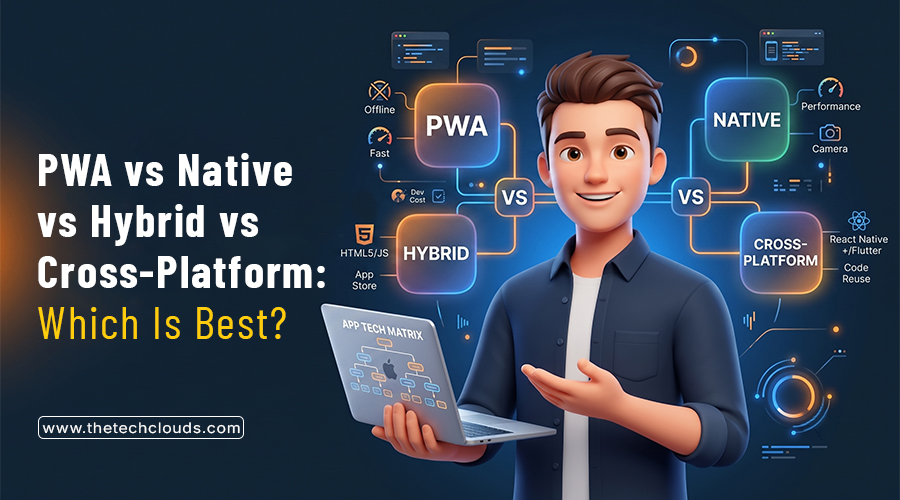
Mobile App Development in 2026: PWA vs Native vs Hybrid vs Cross‑Platform – Which Is Best for Your Business?
Ask five developers about the best way of building mobile apps in 2026. There’s no doubt in this that you’ll get five different answers. Some swear by natives, whereas others...
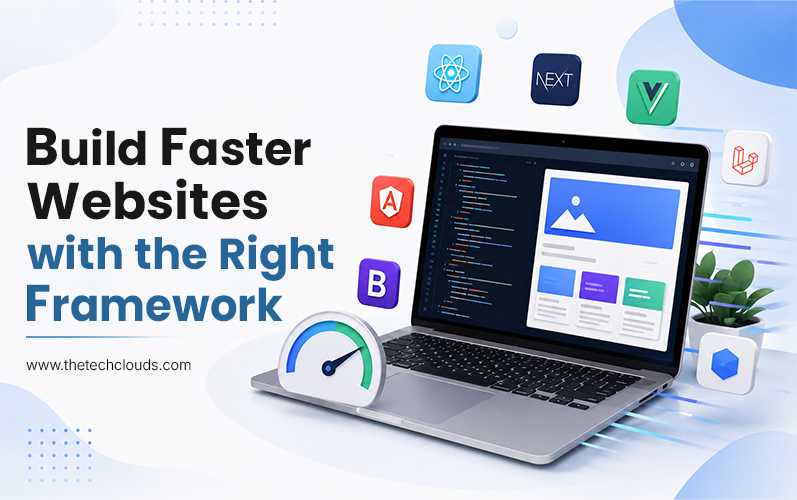
Why Your Website Is Slow and How the Right Development Framework Solves It
Ever clicked on a site and just... left before it even loaded? You're not alone, and neither is your website if it's doing the same thing to its visitors. Mainly,...
Best Technologies for Web Application Development in 2026
Web application development has changed a lot even in the last couple of years. Frameworks keep moving; people expect pages to load within a second, and sticking with outdated tools...