


Why Cloud Computing is Used in Modern Web Application Development
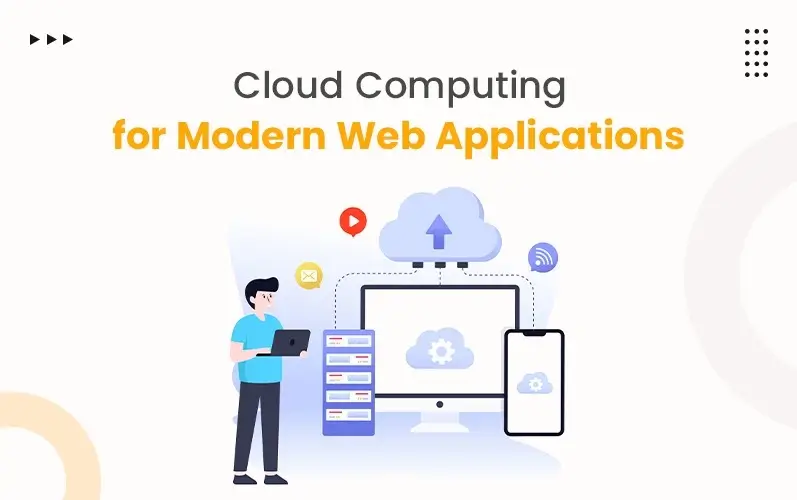
Enterprise-grade cloud migrations bring high ROI rates. From reduced development time and lower ownership costs to better performance gains, cloud computing web applications have several advantages. According to the International Journal of Scientific Research and Technology Journal, cloud native data platforms save 30 to 60% in costs.
Cloud-based application development means building apps that run some of their code on a remote server instead of local servers. For example, web apps, progressive web apps, or PWAs are all cloud-based models. They store data on remote servers and allow remote access. It is also called cloud computing, as cloud-based applications provide all computer services, including databases, networks, and software, remotely. You don’t have to download any specific system for that.
What Is Cloud Computing?
Cloud computing means using internet-based servers to store data and run applications. It removes the need for physical systems and switches to cloud servers. Businesses can access resources anytime, anywhere. It allows quick scaling when demand grows. Cloud services have 3 main models:
- IaaS (Infrastructure as a Service): This model delivers virtual computing resources through the internet. It allows users to rent servers and storage. IaaS also manages the operating system and other components.
- PaaS (Platform as a Service): This model provides a platform for developers to build and test modern web application design.
- SaaS (Software as a Service): This model delivers ready-to-use software through the internet. This makes technology simple, flexible, and cost-effective for modern businesses.
| Feature | On-Premise Development | Cloud-Native Development |
|---|---|---|
| Scalability | Manual & Slow (Hardware-based) | Instant & Automated |
| Cost Model | Capital Expenditure (CapEx) | Operational Expenditure (OpEx) |
| Deployment | Weeks/Months | Minutes (via CI/CD) |
| Maintenance | High (Physical Server Care) | Low (Provider Managed) |
What is Cloud Based Application Development ?
Defining cloud-based application development, we can simply say it is the process of building applications on remote servers. It runs some code on a distant server instead of a local server anyone can access these applications over the internet. It allows developers to use cloud resources such as storage, computing power, and databases to build, manage, and scale applications.
Cloud Computing vs Web Development
| Aspect | Cloud Computing | Web Development |
|---|---|---|
| Core Focus | On-demand delivery of computing resources (servers, storage, databases, networking, AI/ML services) over the internet. | Designing, building, and maintaining websites and web applications that run in browsers. |
| Main Goal | Provide scalable, reliable, and cost-efficient infrastructure and services for applications and data. | Create user-facing interfaces and business logic that users interact with via the web. |
| Typical Work | Architecting cloud environments, managing infrastructure, security, networking, DevOps, cost optimization, and reliability. | Writing front-end and back-end code, designing UI/UX, integrating APIs, testing, and deploying web apps. |
| Key Technologies | AWS, Azure, GCP; Kubernetes, Docker, Terraform, IAM, VPC, serverless (Lambda, Cloud Functions), managed databases. | HTML, CSS, JavaScript/TypeScript; frameworks like React, Angular, Vue; back-end technologies such as Node.js, Django, Spring, .NET, and databases. |
| Skill Set | Cloud architecture, networking, security, automation, monitoring, FinOps, and compliance. | Programming, UI/UX, APIs, databases, performance optimization, accessibility, and SEO basics. |
| Deliverables | Cloud environments, pipelines, infrastructure-as-code, scalable architectures, and disaster recovery setups. | Websites, web apps, dashboards, APIs, microservices, and progressive web apps (PWAs). |
| Relationship | Provides the platform and services where web apps and other applications run, scale, and store data. | Builds the applications that often run on cloud infrastructure and use cloud services such as storage, authentication, and AI. |
| Common Roles | Cloud Architect, DevOps Engineer, SRE, Cloud Security Engineer, Cloud Consultant. | Front-end Developer, Back-end Developer, Full-stack Developer, Web Designer, Web DevOps. |
| Cost Model | Pay-as-you-go or subscription pricing for compute, storage, data transfer, and managed services. | Mostly labor costs (developers/designers), plus hosting, domain, and CDN costs, often on cloud platforms. |
| Example Tasks | Design a multi-region architecture on AWS; set up auto-scaling and CI/CD; implement zero-trust security. | Build a React dashboard; create a REST/GraphQL API; optimize page load and Core Web Vitals. |
What are the Key Benefits of Cloud Application Development?
Cloud technology quietly powers the experience behind the screen. Developers no longer depend on physical servers or fixed systems. They build, test, and scale applications in a much smarter way.Cloud computing application development allows teams to launch features quickly and handle user growth with ease. It also reduces infrastructure worries and lets developers focus on innovation.
Let’s check which business benefits cloud-based applications bring:
- Cost and ROI Efficiency: Server less managed services improve operational performance. It also reduces the risk of failure and improves ROI.
- Development Productivity and Speed: In an arXiv organisation study involving 101 interviews across 86 organisations showed deployment complexity as one of hassles for improving productivity. Cloud infrastructure solves these issues by improving the development workflow.
- Operational Efficiency: The cloud-native ecosystem has surged the adoption rate. This has led to a 30 to 40% reduction in operational expenses.
- Performance Gains: Cloud native CI/CD outperforms VM-based pipelines on CI/CD metrics. It delivers improved application performance for SaaS applications.
- Faster time to Market: Low-code development leads to a shorter development cycle. That leads to up to 30% less development cost and becoming market-ready in less time. Get first-mover advantages.
- Better Capital Allocation: Switching to an application based on cloud computing saves device expenses. You allocate capital based on actual usage.
How to Build a Great Cloud-Based Web App?
Research Your Market
First, clarify what your goal for application development for cloud computing is. Which users’ problem do you want to solve? Who has the pain, and how do they solve it now? List the competitors and note down their UX features. Find strengths and gaps. Then validate the demand using surveys or purchasing data. Try to set a USP that will differentiate your product in the market. This can be UX, niche focus, compliance, speed, pricing, or anything.
Choose your Application Type
Pick the right app model based on your preferred tech stack. Make sure the architecture and cloud services fit your needs. For an ecommerce business, you may need a real-time app for your warehouses in different locations. A data analytics suite can be suitable for large management consultancy giants.
Plan your Application Architecture
Design your cloud-based application workflow. How will they deliver the outcomes? First, consider this. Eventually, you will get answers on which components it needs or which features or settings will elevate the performance.
| Architecture Area | What to Plan |
|---|---|
| Frontend | Framework, routing, state management, responsive design |
| Backend | APIs, business logic, authentication, service structure |
| Data Layer | Database, caching, search, file storage |
| Integrations | Payments, email, SMS, third-party APIs, webhooks |
| Security | OAuth/OIDC, roles, encryption, secrets, WAF, DDoS protection |
| Scalability & Reliability | Load balancing, auto-scaling, backups, disaster recovery |
| Observability | Logs, metrics, tracing, alerts, dashboards, SLOs |
| Cost | Serverless, managed services, reserved capacity, usage-based services |
Choose a Cloud-based Platform
Now pick a cloud server provider according to your needs. AWS, Azure, and GCP are good options here. Evaluate whether you need a specialized stack like Vercel, Netlify, or Supabase for backend development.
Select your Database System
Choose the database you will need. Here is a decision table :
| Storage Decision | What to Consider | Common Options |
|---|---|---|
| Relational (SQL) | Structured data, transactions, complex queries | PostgreSQL, MySQL, SQL Server |
| NoSQL | Flexible data, fast lookups, high-scale workloads | MongoDB, DynamoDB, Redis |
| Managed vs Self-hosted | Less maintenance vs. more control | AWS RDS, Cloud SQL, Self-managed DB |
| Multi-model | Need both SQL and NoSQL capabilities | PostgreSQL, Azure Cosmos DB |
| Read/Write Patterns | Read-heavy, write-heavy, or balanced workloads | Read replicas, caching, partitioning |
| Consistency | Strong consistency vs. eventual consistency | SQL transactions, NoSQL consistency models |
| Scaling | Vertical scaling or horizontal sharding/partitioning | Replicas, sharding, partitioning |
| Backup & DR | Recovery time, backups, point-in-time restore | Automated backups, snapshots, replicas |
| Cost | Storage, IOPS, compute, and data transfer costs | Compare pricing at expected scale |
Prepare for Deployment
Start with a clear planning. Prepare for Deployment. Set up a reliable CI/CD pipeline to automatically build, test, scan, and deploy your cloud application. Use separate development, staging, and production environments with secure configuration and secrets management. Plan deployment, monitoring, backups, and rollback strategies to make releases safe, repeatable, and reliable.
Why Web Application Developers Need Cloud Infrastructure
Cloud infrastructure gives developers flexible tools and features that provide them with the upper hand to manage complex hardware systems. The following points explain why cloud infrastructure has become essential for modern web development:
On-Demand Resource Scaling:
Using cloud applications escalates promptly to provide services when user traffic suddenly increases. Platforms like Amazon Web Services (AWS), Microsoft Azure, and Google Cloud provide instant scaling infrastructure. Developers expand resources automatically without interrupting application performance.
Cost-Effective Development:
Cloud platforms remove the need for extensive physical infrastructure. Developers only pay for resources they actually use. This pay-as-you-go model makes development more affordable for startups.
Microservices & Containerization:
Cloud infrastructure supports microservices for flexible application design. Tools like Docker or Kubernetes platforms manage containers and improve team agility.
Improved Collaboration Scope:
Cloud platforms allow teams to work together from different locations. Developers share code, updates, and resources in real time. This improves productivity and speeds up application development cycles.
Robust Security Features:
Cloud platforms offer strong security and finance management for applications. They offer encryption, monitoring, and automatic security updates. Cloud support for zero trust architecture to protect systems and user data.
Managed Databases Securely:
Manually scaling SQL databases was a thing of the past. With cloud infrastructure, developers can access several flexible tools. This helps in building modern web apps easily.
Serverless FaaS Technology:
Serverless FaaS lets developers run code without managing servers. It supports a no-ops approach with minimal operational support. This improves the cost-to-value ratio for modern applications.
Key Roles of Cloud Computing in Web Application Development
Cloud computing application development has become a popular choice. The following points show how cloud technologies support modern development practices:
Scalability & Flexibility:
Cloud platforms allow applications to scale out resources whenever traffic demand increases. This flexibility supports modern web application architecture built for growth.
Edge Computing:
Cloud platforms come with edge computing that processes data closer to users. This reduces latency and makes modern web apps lightning fast. Due to this prominent feature, the cloud has now become the most accepted medium in mobile application development services.
AI-Ready Infrastructure:
Cloud platforms support LLM integration and vector database processing. It also provides GPU-as-a-service for high-performance AI workloads.
Serverless Architecture Growth:
Serverless architecture removes the need for developers to manage servers. Many companies now build scalable platforms using apps cloud computing models.
The Speed Factor:
Cloud networks reduce latency between servers and application users. This closes the latency gap and improves real-time user experience.
Faster Deployment & Development:
Cloud tools simplify application testing, building, and deployment processes. Developers release updates faster using CI/CD pipelines and shared cloud platforms.
Ready to build scalable cloud-powered web apps!
Conclusion
Cloud computing has brought a paradigm shift in modern web application development services. Honestly, there’s no question about it. It offers flexibility, productivity, and progressive strategies to meet the ever-changing demands of the tech realm. However, like every other service, its efficiency mostly depends on the tools and applications it uses.
Keep an important thing in mind: the digital arena is endless. You can effortlessly reach your targeted audience with the right strategy and guidance.
We, The Tech Clouds, offer cloud migration services along with mobile and web app development. Our team supports deployment, optimization, and secure cloud infrastructure management.
Get in touch with us today and discuss your next web application project!

Frequently Asked Questions
How Does Cloud Computing Benefit Web and Mobile App Development?
Cloud platforms speed up development and simplify application scaling. They also improve collaboration and deployment efficiency. The Tech Clouds (TTC) helps businesses build reliable web and mobile applications using cloud technologies.
Which Cloud Service Models Are Commonly Used in App Development?
Developers use different cloud service models for application development. These include Infrastructure as a Service (IaaS), Platform as a Service (PaaS), and Software as a Service (SaaS). Each model supports different development needs.
How Does The Tech Clouds (TTC) Implement Cloud Solutions for Web and Mobile Apps?
The Tech Clouds (TTC) have strong expertise in modern cloud technologies. Our developers use Amazon Web Services, Microsoft Azure, and Google Cloud Platform for development. These platforms help businesses build secure and scalable applications.
Recent Posts






Related Blogs

AI App Development Trends 2027: What Businesses Need to Know
A CTO opens two dashboards side by side. One is his competitor's; the other is his own. The competitor's page was built on an AI system that tracks customers' order...

How to Speed Up Your WordPress Site: The Ultimate Optimization Guide
You have gone above and beyond to build your WordPress site, but when a visitor arrives, the loading wheel starts spinning. First 3 seconds gone, then five and so on....

App Development Cost by Country in 2027: USA vs UK vs India
You may want a web app or mobile app with almost the same features, but you’re still getting three different quotes from three different agencies in three different countries. App...
How to Hire Dedicated Developers: A Complete Guide from Scratch
Most businesses don't plan to outsource. It happens when your internal teams can’t cope with the demands of the existing market. Suppose a project that requires something which your present...

The 7 Phases of Web Development: From Idea to Launch
Anyone can think of a website design while working late at night or doing a job at dawn, but the problem hits when it comes to turning it into reality....
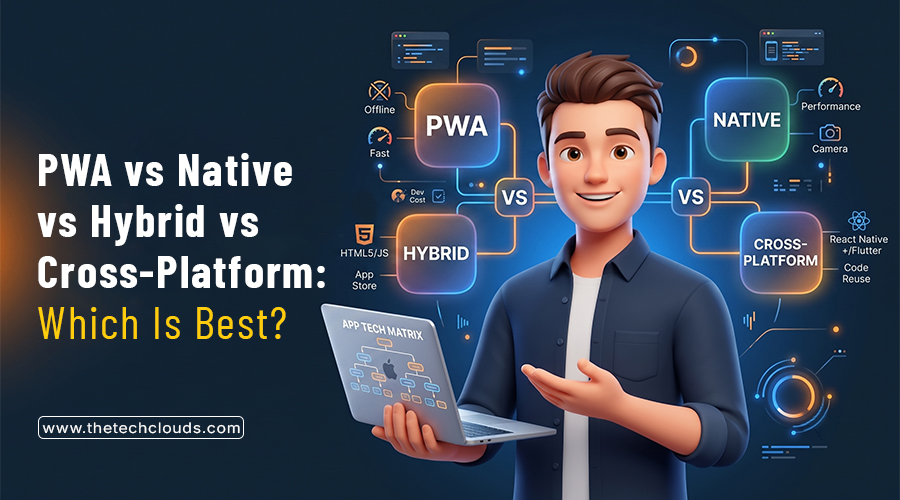
Mobile App Development in 2026: PWA vs Native vs Hybrid vs Cross‑Platform – Which Is Best for Your Business?
Ask five developers about the best way of building mobile apps in 2026. There’s no doubt in this that you’ll get five different answers. Some swear by natives, whereas others...
Why Your Website Is Slow and How the Right Development Framework Solves It
Ever clicked on a site and just... left before it even loaded? You're not alone, and neither is your website if it's doing the same thing to its visitors. Mainly,...
Best Technologies for Web Application Development in 2026
Web application development has changed a lot even in the last couple of years. Frameworks keep moving; people expect pages to load within a second, and sticking with outdated tools...