


What Is Agentic AI: A Comprehensive Guide to Smart Automation
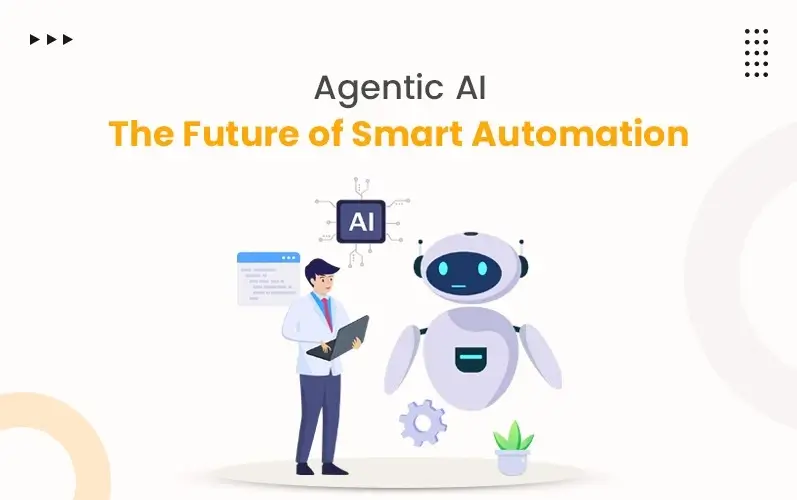
Artificial intelligence significantly changes today’s work procedure. Once it started with a simple chatbot that provides answers to some basic questions. But now it transforms the way we work. Many reports show that businesses are increasing their budget limit for AI resources every year. Mainly after the introduction of agentic AI.
Agentic AI is an independent artificial intelligence system. It is capable of thinking, planning, and executing. It adapts to every action easily and achieves intricate goals without human involvement. A paradigm shift has taken place in the technological sphere after its invention. Autonomous action and decision-making become a breeze with this artificial intelligence system.
In 2024, the growth was just $5.2 billion. But the October 2025 market.us report estimated that the global agentic AI market size will grow 44% annually. It is expected to cross $196 billion by 2034.
Key Takeaways
- Agentic AI enables autonomous decision-making and task execution with minimal human intervention.
- It goes beyond traditional AI by focusing on goal-driven actions and multi-step workflows.
- The technology works through key processes such as perception, reasoning, planning, and execution.
- Businesses use Agentic AI to automate complex operations and improve productivity.
- Agentic AI is rapidly gaining adoption as organizations move toward smarter automation.
What Is Agentic AI?
Agentic AI is also known as an autonomous AI. It is a self-regulating artificial intelligence system capable of planning, design, and execution. All on its own. No human intervention is needed.
Unlike simple AI tools, it doesn’t wait for every instruction. It understands the objective and figures out the best path. This innovation optimizes workflow. Thus, allowing companies to work more effectively and promptly.
How Agentic AI Works
Agentic AI stands upon four strong pillars. These components make it more advanced than basic automation tools. Let’s have a look at this step-by-step process to know how it works:
Perception Ability:
AI agents gather real-time information through images, texts, sensors, and enterprise databases. Through NLP and computer vision, it builds situational awareness. Perceptual abilities help agents collect data and interpret it into real tasks.
Reasoning Process Unit:
Applies several reasoning techniques like ReAct and Chain-of-Thought on collected data. This helps to understand the situation, recognize patterns, and define objectives. Frame responses through Retrieval-Augmented Generation (RAG).
Planning Session:
Agentic AI disintegrates the whole process into small, achievable tasks. At this stage, software testing services play a critical role. It helps us to analyze whether agentic AI dynamically adapts to complex processes or not.
Execution State:
After breaking into subtasks, it runs APIs, programs, and code. Agentic AI measures performance after each step and initiates adjustments, if needed.
Key Benefits of Agentic AI
Businesses are adopting agentic AI because it delivers measurable outcomes. It transforms automation into intelligent execution:
Here are some major benefits organizations can experience:
Optimize Efficiency:
Agentic AI has the ability to think, plan, and execute. It operates better than any human being. Automate repetitive tasks and provide error-free results. This ensures consistency while increasing overall productivity.
Faster Decision-Making:
The system selects specific actions for specific tasks. It can process large volumes of data simultaneously. This helps the business to run faster with evolving market demands.
Boost Self-Service:
Integrating agentic AI, chatbots understand the customer’s intent and thought patterns. Agentic AI development helps the system to guide customers in resolving their queries without waiting for a human agent.
Cost Reduction:
Automation reduces dependency on manual resources. This minimizes operational errors while improving financial efficiency. Thus, reducing overall business expenses.
Flexibility in Cloud Operations:
Everyone knows that multi-cloud architecture is becoming essential for growing businesses. At this stage, agentic AI monitors, manages, and adjusts cloud resources in real time without manual intervention. This brings flexibility in cloud operations.
Scalable Operations:
As business demand grows, agentic AI systems handle workloads without equal increases in workforce sizes. This supports sustainable expansion.
Problem Solving Ability:
Unlike traditional AI, autonomous AI can solve any intricacies with its planning, reasoning, and goal-setting abilities.
Creative Abilities:
This innovation comes up with new ideas and notions based on the real-time data given by humans. It is powered by pattern recognition and data extrapolation, which drives creativity.
Agentic AI vs. Generative AI vs. Traditional AI
Agentic AI, Generative AI, and Traditional AI. Due to similar surnames, people often think all of them are equal and do the same operations. But the surprising fact is that all three are completely different things. Understanding the differences helps businesses choose the right solution for their needs.
| Features | Agentic AI | Generative AI | Traditional AI |
|---|---|---|---|
| Main Purpose | Goal Completion | Content Creation | Rule-Based Tasks |
| Autonomy Level | High. Has self-directed AI. | Moderate. Completely prompt-based. | Low. Requires human input for further steps. |
| Task Type | Multistep Workflow | Text generation, code creation, and image generation | Fixed automation |
| Decision Capability | Independent planning | Pattern-based output | Predefined logic |
| Memory | Maintains task context and remembers goals across steps | Limited session memory | No adaptive memory |
| Tool Usage | Extensive. Uses external tools, APIs, and systems independently | Limited tool integration | Uses predefined system rules only |
| Reasoning | Performs multi-step reasoning to reach the final outcome | Pattern-based reasoning typically done in a single step | Logic-based rule execution dependent on manual control |
| Examples | Workflow automation systems and autonomous business agents | AI chatbots and content generators | Basic automation scripts based on rule engines |
Agentic AI Vs. AI Agents: A Misunderstood Concept
AI agents and agentic AI are often misunderstood as the same thing. Though their names are quite similar, their operations are completely different. Let’s see how:
1. AI Agents
AI agents are the individual systems or programs that perform tasks autonomously.
They are able to:
- Perceive input.
- Make decisions based on rules or models.
- Take action to achieve a goal.
Examples:
Customer support chatbot. Check out these best AI chatbots. They are capable of human-like conversations. They provide you with the answer to your queries based on prompts.
2. Agentic AI
Agentic AI refers to some autonomous AI systems that can independently plan, reason, and execute without human help.
It focuses on:
- Autonomy.
- Decision-making.
- Multi-step planning
- Goal-driven behavior.
Examples:
- Auto-GPT
- BabyAGI
- CrewAI
- Microsoft AutoGen
Key Business Applications of Agentic AI
Agentic AI is transforming multiple industries by enabling intelligent automation across departments. It supports complex business operations beyond simple digital assistance.
Below are practical applications of Agentic AI:
Customer Support Automation:
The system receives queries, categorizes issues, and creates support tickets. Teams are assigned the specific work, and it tracks resolution progress.
Healthcare Operations:
Autonomous AI has brought a significant change in the healthcare sector. It schedules appointments, generates invoices, and processes insurance claims. It eases the operation of the entire EHR; thus, the process becomes faster and error-free.
Supply Chain Coordination:
Agentic AI predicts demand patterns, monitors inventory levels, and adjusts procurement decisions. This prevents shortages and overstocking situations.
Sales & Marketing:
Agentic AI enhances sales and boosts marketing campaigns. It automates repetitive tasks while connecting to CRMs. Autonomous systems help with forecasting. It analyzes human behavior and provides real-time insights.
Robust Security:
Agentic AI development services are enabled to scan threats. Organizations lined up multiple autonomous systems to detect any unusual behavior and to respond to any issue.
The Bottom Line
Agentic AI represents the next evolution of intelligent automation. It moves beyond reactive systems and focuses on proactive goal achievement. The growth of agentic AI is inevitable. The 10X rise is expected by 2030. Businesses that integrate agentic AI strategically improve efficiency, reduce costs, and enhance customer experiences.
At The Tech Clouds (TTC), we have incorporated some agentic AI capabilities into our CRM development services. This helps sales teams focus on closing deals instead of managing spreadsheets. At The Tech Clouds (TTC), we do not just build software. We create intelligent systems that work proactively for your business growth. Conta ctus today and transform your business with AI-driven innovation.

Frequently Asked Questions
What's the basic difference between agentic AI and generative AI?
Generative AI creates content. On the other hand, agentic AI enables one to make plans, reason, and divide large data into small subtasks. It operates without human intervention and in some scenarios works with generative AI to achieve the best outcome.
What are AI agents?
AI agents are static software that works with predefined rules with minimal autonomy. They assist humans, share insights, and make their job easier. But they can't perform independently or solve an intricate problem like agentic AI.
What is agentic orchestration?
Agentic orchestration is a scenario in which agents, robots, and people work together to accelerate the workflow. It establishes roles, access controls, workflows, and safeguards to ensure secure and compliant execution.
How is policy compliance maintained by AI agents?
AI agents operate based on predefined control frameworks, guardrails, and orchestration protocols. Continuous monitoring and audit logs help ensure their actions align with organizational policies and governance standards.
Recent Posts






Related Blogs
AI App Development Trends 2027: What Businesses Need to Know
A CTO opens two dashboards side by side. One is his competitor's; the other is his own. The competitor's page was built on an AI system that tracks customers' order...

How to Speed Up Your WordPress Site: The Ultimate Optimization Guide
You have gone above and beyond to build your WordPress site, but when a visitor arrives, the loading wheel starts spinning. First 3 seconds gone, then five and so on....

App Development Cost by Country in 2027: USA vs UK vs India
You may want a web app or mobile app with almost the same features, but you’re still getting three different quotes from three different agencies in three different countries. App...
How to Hire Dedicated Developers: A Complete Guide from Scratch
Most businesses don't plan to outsource. It happens when your internal teams can’t cope with the demands of the existing market. Suppose a project that requires something which your present...
The 7 Phases of Web Development: From Idea to Launch
Anyone can think of a website design while working late at night or doing a job at dawn, but the problem hits when it comes to turning it into reality....
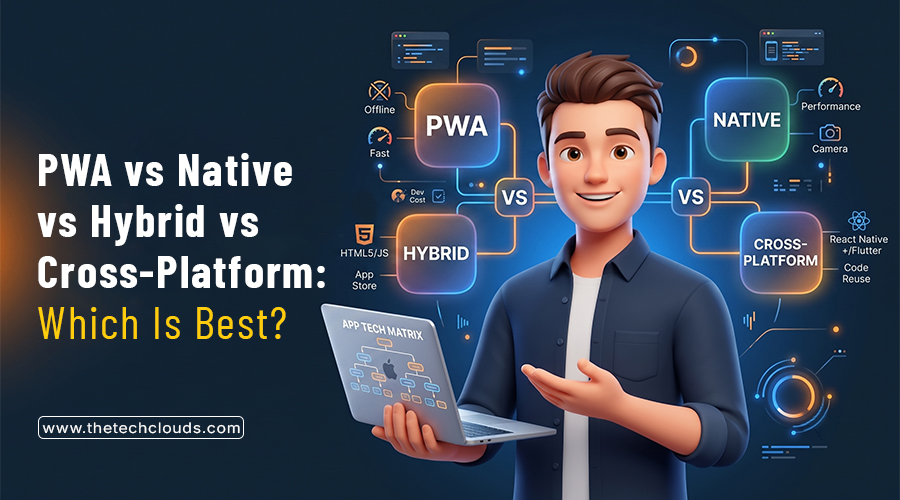
Mobile App Development in 2026: PWA vs Native vs Hybrid vs Cross‑Platform – Which Is Best for Your Business?
Ask five developers about the best way of building mobile apps in 2026. There’s no doubt in this that you’ll get five different answers. Some swear by natives, whereas others...
Why Your Website Is Slow and How the Right Development Framework Solves It
Ever clicked on a site and just... left before it even loaded? You're not alone, and neither is your website if it's doing the same thing to its visitors. Mainly,...
Best Technologies for Web Application Development in 2026
Web application development has changed a lot even in the last couple of years. Frameworks keep moving; people expect pages to load within a second, and sticking with outdated tools...