


Why Multi-Cloud Architecture Is Becoming Essential for Growing Businesses
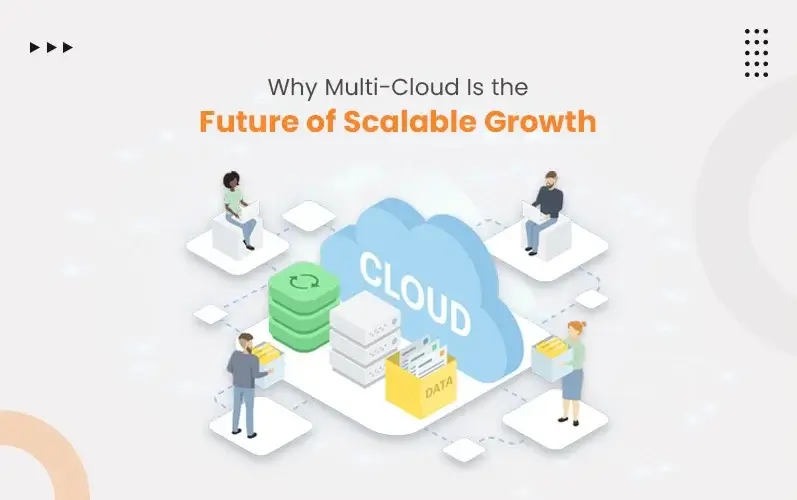
Cloud computing has become an integral part of modern businesses. Companies are facing heavy pressures to stay adaptable, high-performing, and creative. Unlike traditional single-cloud or hybrid models, multi-cloud architecture delivers exceptional flexibility, expansibility, and protection. This is why shifting towards multi-cloud is in demand.
Businesses are now harnessing different providers to meet diverse needs. This strategy also gives them the best match of stability, productivity, and pricing. According to the recent report of 2024, nearly 89% of enterprises have already made this shift.
This blog will reveal what multi-cloud architecture is, why it is in demand, and how it differs from hybrid clouds. Let’s stay tuned till the end to know the benefits businesses get after adopting it and how to implement multi-cloud architecture.
Key Takeaways
- Multi-cloud architecture uses multiple cloud providers to improve flexibility and scalability.
- It helps businesses avoid vendor lock-in and optimize costs.
- It improves performance by using the best services from different providers.
- Multi-cloud increases reliability, security, and business continuity.
- A clear strategy and proper tools are essential for successful implementation.
What Is Multi-Cloud Architecture?
Multi-cloud architecture is an IT strategy. It means your organization is not solely dependent on AWS or Azure or Google Cloud. You can take multiple cloud computing services from different vendors. The objective goes beyond simple diversity. Multi-cloud management architecture ensures flexibility, scalability, and security. Inclusion of various providers means you’re uniting the strength of each of them. This makes your business robust and multifaceted.
You are not being tied to a single vendor. Instead, you’re working with multiple vendors, getting advantages from each of them. This strategy provides flexibility, cost optimization, and better performance across environments. Knowing how to design an effective cloud computing architecture, businesses can use new technologies that balance their entire workload.
Key Reasons Behind Multi-Cloud Strategies’ Acceptance
Businesses encounter several risks and limitations while depending on a single vendor. This leads them to think of a solution that meets all critical needs. Multi-cloud architecture was born out of necessity. Let’s see why modern businesses are accepting it:
Avoid Vendor Lock-In:
Depending on one vendor limits your innovation. When costs arise, companies feel constrained. If businesses escape the control of one vendor, they again become solely dependent on another. A multi-cloud approach offers freedom and lets you free yourself from this cycle.
Expansive Markets Availability:
Using multi-cloud architecture, businesses serve global markets. Hiring trusted microservices development services ensures compliance with local regulations while optimizing performance across locations.
Cost Efficiency:
Each provider has set its own pricing. Mixing them offers you an upper hand to choose the most cost-effective provider for each workload. This approach cuts down the excess cost burdens.
Performance Optimization:
Choosing cloud services based on proximity, efficiency, or service quality. It helps businesses deliver faster, more reliable apps to users worldwide. This approach also decreases operational downtime risks.
Sustainability Targets:
Multi cloud architecture supports green IT strategies. Google Cloud and Azure emphasize energy-efficient regions. They offer tools to help organizations lower carbon emissions. Hire AWS developers who can design and implement sustainable solutions tailored to your business needs.
Industry-Specific Personalization:
Multi-cloud management opens the door for emerging tools. Spanning healthcare compliance technologies to financial analytics services. This strategy addresses different business demands.
Innovation Enablement:
Every provider has specialized expertise. Google Cloud stands out for its advanced AI capabilities. AWS leads in global infrastructure and geographic coverage. Azure is highly regarded for seamless enterprise integration. Accessing different cloud platforms enables experimentation with cutting-edge tools and services.
Key Benefits of a Multi-Cloud Strategy
Businesses have seen various advantages after incorporating a multi-cloud strategy. Let’s have a look at what these are:
Flexibility:
Understanding different cloud servers helps developers choose the best tools from each cloud provider for specific tasks.
Higher Availability:
Using multiple clouds ensures critical systems stay operational even if one platform fails.
Better Performance:
Selecting cloud regions closest to users can reduce latency and improve responsiveness.
Risk Mitigation:
Multi-cloud infrastructure distributes workloads across different platforms, reducing dependency and risks.
Improved Security:
Segregating data across providers adds an extra layer of protection against breaches. Hire DevOps engineers to build and maintain CI/CD pipelines. This automatically deploys applications across cloud environments, strengthening protection.
Business Continuity:
Distributed infrastructure safeguards operations against localized issues or disruptions.
Competitive Edge:
Leveraging multi cloud architecture allows businesses to use specialized tools. This enhances experimentation and innovation.
Multi-Cloud vs. Hybrid Cloud: Key Differences Explained
| Aspect | Multi-Cloud | Hybrid Cloud |
|---|---|---|
| Definition | Use two or more public cloud providers. | Combines public cloud with private or on-premises infrastructure. |
| Infrastructure | Entirely cloud-based across multiple vendors. | Mix of cloud and on-premises systems. |
| Vendor Dependency | Reduces reliance on a single cloud provider. | May still depend heavily on one provider. |
| Focus | High flexibility in selecting the best services per workload. | Flexibility depends on integration between environments. |
| Management | Complex environments require tools to manage multiple providers. | Prioritize workload distribution between private and public platforms. |
| Example Use Cases | Use AWS for storage and GCP for analytics. | Sensitive banking data is maintained within a private cloud, while public applications run on AWS. |
| Flexibility | High flexibility in selecting the best services per workload. | Flexibility depends on integration between environments. |
| Complexity | Requires cross-cloud management and governance tools. | Requires integration between private and public systems. |
| Primary Goal | Avoid vendor lock-in and optimize performance. |
Extend legacy infrastructure to the cloud. |
Key Practices for Implementing Multi-Cloud Architecture
Multi-cloud adoption requires a practical strategy. A step-by-step approach helps to create a robust cloud architecture. Let’s understand how:
Set Clear Strategic Goals:
List down your pain points. Is it budget savings, resilience, or innovation? State clearly why multi-cloud architecture is your priority.
Select Providers Based on Your Needs:
Analyze the strengths of each provider. If your focus is on AI and analytics tools, choose Google Cloud Platform. Select AWS for a strong security framework. If you want good support for legacy systems, stretch your hands for Azure.
Adopt Cloud Management Tools:
Use tools like HashiCorp, VMware, or CloudBolt. They help you integrate multiple providers into a single system.
Establish Unified Security Policies:
Multi-cloud architecture enables organizations to establish consistent security and compliance standards across all providers. This approach maintains flexibility and control.
Train IT Teams:
Train teams on multi-cloud tool sets and practices. Ask for trusted cloud migration services. They help you review and update architecture based on performance data.
Use AI-Driven Tools:
AI-driven tools automate resource allocation. These tools distribute workloads and predict analysis. They simplify operations across multi-cloud environments.
Seamless Integration:
Use interoperable tools for smooth integration. Incorporate Kubernetes, Istio, and Terraform to operate seamlessly across different cloud platforms.
Continuous Performance Monitoring:
Strengthen your cloud environment with strong encrypted protocols. Use zero-trust frameworks and identity management to protect sensitive data and information.
Real-Time Checking:
Monitor your system continuously. Use tools like AWS CloudWatch or Azure Monitor. They measure cloud performance and make strategic, evidence-based adjustments.
Container Orchestration with Kubernetes:
Implement Kubernetes multi cloud architecture. This strategy manages and deploys containerized applications efficiently across diverse clouds.
Get a multi-cloud strategy built for your business!
The Bottom Line
Zero-trust security, fog computing, and AI-driven orchestration are no longer optional. These are strategic necessities in the era of digital transformation. Organizations need flexibility, scalability, and resilience to meet evolving business demands. A single or hybrid cloud setup is often not enough to fulfill these requirements. That’s why understanding Multi Cloud Architecture benefits has become essential, as businesses increasingly adopt multi-cloud strategies to improve performance, reliability, and operational agility.
However, the success depends on proper governance, skilled teams, and clear implementation strategies. Businesses that invest wisely in multi-cloud today position themselves for sustainable growth and long-term technological agility.
Ready to move beyond hybrid? We would love to help you! The Tech Clouds (TTC) helps businesses transition seamlessly to a powerful multi-cloud architecture. This strategy enhances performance, reduces vendor dependency, and strengthens risk mitigation strategies. Our team provides end-to-end support. From migration to optimization, including expert server management services. Call our experts today and be led confidently into your multi-cloud future!

Frequently Asked Questions
What are the key benefits of adopting a hybrid multicloud strategy for enterprises?
Hybrid multicloud enhances flexibility, performance optimization, and disaster recovery readiness. It reduces downtime risks and prevents vendor lock-in. The Tech Clouds (TTC) enables businesses to maximize efficiency through secure, well-managed hybrid multicloud environments.
What are the primary challenges enterprises face when implementing and managing a hybrid multicloud environment?
Enterprises face integration complexity, security consistency issues, and cost management difficulties. Managing multiple platforms requires skilled teams and governance frameworks. The Tech Clouds (TTC) simplifies hybrid multicloud management through structured planning and automation.
Why is zero-trust security critical for hybrid multicloud?
Zero-trust security verifies every user and device before granting access. Hybrid multicloud environments expand attack surfaces across platforms. Implementing zero-trust ensures continuous authentication, minimizing breaches, and strengthening enterprise-wide security across distributed cloud infrastructures.
What tools help enterprises manage hybrid multicloud effectively?
Centralized monitoring, automation tools, and cloud management platforms improve visibility. DevOps pipelines and identity management solutions ensure operational efficiency. The Tech Clouds (TTC) leverages advanced management tools to streamline hybrid multicloud performance and governance.
What is digital sovereignty?
Digital sovereignty refers to control over data, infrastructure, and technology within national regulations. It ensures compliance with local data protection laws. Hybrid multicloud strategies support sovereignty by allowing data placement across compliant regional cloud providers.
Recent Posts





Related Blogs
Cloud Application Development in 2027: Trends, Technologies, and Best Practices
The global cloud application development market is expanding rapidly. It is $450.1 billion in 2026 and is projected to reach $806.91 billion by 2030, with a 15.7% CAGR over the...
How Do You Choose the Right Cloud Provider for Your Migration?
Picking a cloud provider for a migration isn't like picking a laptop. You're handing over your data, your uptime, and a good chunk of your budget for years. The wrong...

Server Security Hardening: Best Practices to Protect Your Infrastructure in 2027
Server security hardening is the process of strengthening your server by systematically configuring it, applying updates, limiting unnecessary access, disabling unused services, and minimizing vulnerabilities to malware and other cyber...

High CPU Usage on Your Server: Causes, Diagnosis, and Fixes
Suddenly your server feels sluggish? You have seen all requests timing out, and the dashboard showing a red signal screaming: CPU at 100%. Do you know what that sign means...

Why Does My Server Keep Crashing? Common Causes and Fixes
Has your server crashed in the middle of a critical deployment, taking your uptime, your revenue, and peace of mind with it? You’re not alone. Every year, businesses lose thousands...

Common Server Problems and How to Fix Them: The Complete Guide
KeyTakeaways Most slowdowns occur when CPU stays above 90%, and disk I/O wait exceeds 10–20ms. Focusing on DNS authentication and strengthening firewall rules can prevent network hiccups, which are a...
How The Tech Clouds Built a Smarter Website & Server Monitoring Solution
Your website looks nice; nothing felt off. The server seems to be up; who knows? But then you wake up at 2 AM to check whether everything runs as you...
What Is The Difference Between Cloud Computing and Cloud Migration?
Businesses today aren’t just building in the cloud; they are constantly rethinking where and how their systems run. That’s where the concept of cloud migration comes in: moving your on-premises...