


Ecommerce SEO Strategies to Rank Higher in 2026
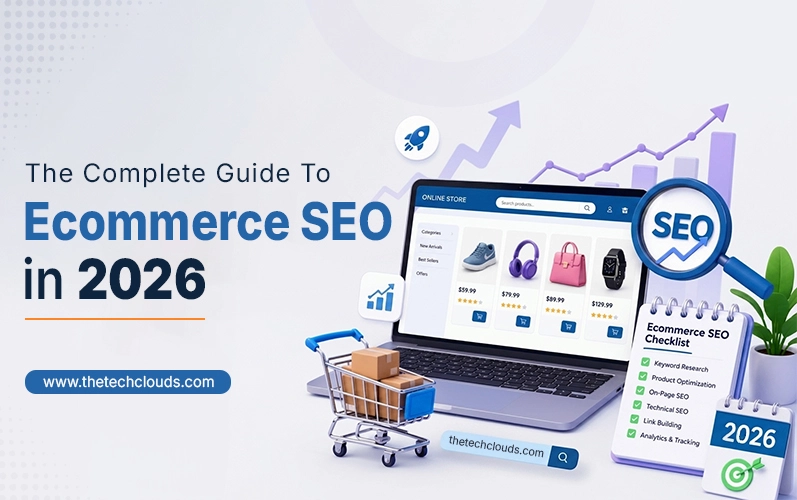
You are running your online store, but whenever customers search for something, it doesn’t show up. As a result, you’re losing sales and failing to generate revenue. How can you make that right? The answer is by leveraging the right eCommerce SEO strategies.
In 2026, you can’t achieve higher rankings just by focusing on keywords. You need other techniques such as CRO, product page and category page optimization, Core Web Vitals, and more.
This blog explains clearly what eCommerce SEO is, why it is so important, and the 9 most essential strategies to provide the best shopping experiences for both customers and search engines.
Key Insights:
- The future of SEO strategy is not just optimizing your store for Google, but also for AEO and AIO.
- E-commerce SEO improves rankings and mobile responsiveness.
- It also attracts high-traffic, ready-to-act buyers and delivers higher ROI.
- Modern eCommerce SEO strategies include visual and voice search, product and category page SEO, CRO, and off-page optimization.
- Online store owners hire SEO experts who focus on user intent keywords, Core Web Vitals, technical SEO, and EEAT Signals.
What is E-commerce SEO?
E-commerce SEO is the process by which you can increase your store’s visibility in search engines so that potential buyers can easily discover your products and categories. It combines technical optimization, keyword research, product SEO, category SEO, content creation, authority building, and user experience. When you use all these steps together, they attract qualified traffic and convert visitors into paying customers.
Why Is E-Commerce SEO Important?
Brings High-Intent Buyers:
Paid ads stop increasing your visibility the day you stop paying them. But when you implement the right SEO strategy for an e-commerce website, it attracts visitors with high purchase intent.
Drive High Traffic:
Organic search drives website traffic by up to 53.3%, making it the largest digital channel. Search for the eCommerce SEO platforms that boost SEO the most.
Better Rankings:
Customers mostly trust the websites that appear on the first page of Google. Strong SEO signals credibility; that’s what makes customers choose you over your competitors.
Improve Mobile Experience:
According to the latest research, nearly 53% of mobile users leave a page if it takes more than 3 seconds to load. Hire SEO experts who create eCommerce SEO strategies focusing on this to improve both rankings and customer satisfaction.
Higher ROI:
Paid campaigns stop generating results when your budget ends. SEO is different; it continually works to attract new visitors and retain existing ones. Thus, providing qualified leads over months and years.
9 Most Important eCommerce Strategies That Boost Rankings & Traffic
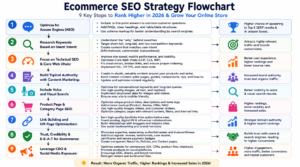
1. Optimize for Answer Engines (AEO):
The future of SEO with AI is now changing the landscape of how customers search. They are now using conversational questions to ask their queries. So instead of just inserting some keywords, include to-the-point answers, FAQs, clear headings, and table structure data. When search engines notice all these in your content, it will definitely help you come up in the top five SERP results.
2. Research Keywords Based on Users’ Intent:
The practice of including high-volume keywords has long gone. It’s high time to think about why people search. If someone is searching for ” best running shoes under $100”, then it means they are more likely to buy your products than someone who just searches for “running shoes”. So, include the keyword in your content that feels relevant for the buyers. This is how you can boost your visibility.
3. Focus on Technical SEO & Core Web Vitals:
An online store that is striking in its design looks elegant to customers. But what if it takes a long time to load, looks fragile on mobile, and has a confusing navigation structure? Customers notice, judge in a second, and never come back. That’s where you need to believe that present-day UX drives SEO: improve site speed, simplify navigation, compress images, and reduce unnecessary scripts. Focus on Core Web Vitals; this has become an important part of eCommerce SEO strategies.
4. Build Topical Authority with Content Marketing:
Create helpful, informative content about your products. Show its usage and benefits. When people learn its importance, they are more likely to buy that product. Instead of creating random blogs, create blogs around what problems your products can address. Develop clusters covering buying guides and product comparison. Include FAQs and tips to extend its shelf life. When buyers get what they have in mind, they stick with your products and never leave. Companies that build topical authority through consistent blogging have seen web traffic increase by about 55%.
5. Include Voice and Visual Search:
Nowadays, most customers use Google Lens or voice assistants like Siri or Alexa to ask their questions. To thrive in this era, it’s important to optimize image filenames, alt text, structured data, and conversational content to improve discoverability. Use clear product photos, descriptive metadata, natural language content, and a benefit or usage manual, so that Google can understand your product better and match it with users’ requirements.
6. Product Page & Category Page SEO:
For eCommerce SEO, product and category pages are very valuable. They are the places where revenue is generated, so focusing on them is really needed. A research report states that 87% of consumers are ready to buy a product when they receive detailed product information. Create unique product descriptions that incorporate user-intent keywords and carefully optimize their titles. Also add high-quality images with clear meta descriptions. Include customer reviews for each product and make internal links between categories and other products. A successful SEO strategy for an e-commerce website must start with well-optimized product and category pages.
7. Link Building and Off-Page Optimization:
Link building and off-page optimization are two important factors in E-commerce SEO strategies. Focus on earning links from other credible websites through original research, digital PR, guest posts, valuable content, and supplier partnerships. These backlinks are one of Google’s strongest ranking signals. When you focus on this, search engines like Google bring ready-to-buy customers.
8.Trust, Credibility & E-E-A-T for Ecommerce:
Google recommends highly credible websites, but how will you demonstrate your trust signals? There are so many ways. Implementing at least three to four can help you increase your ranking. State your business information clearly. Show customer reviews and author profiles for blogs. Regularly update your content so that your customers have clear information about your product. Attach secure payment options and clarify the return policies. Add client testimonials, and if you offer certification for any product or services, display them. Trust takes time to build with consistent effort; you will notice an increase in customers’ visits and CTR.
9. Leverage CRO & Social Media Exposure:
Getting visitors into your store is one thing, and turning them into long-term buyers is another. Conversion Rate Optimization (CRO) and making partnerships with social influencers can do that. Let your software testing services team test your product pages, improve CTA, simplify checkout, and reduce unnecessary form fields. Also provides brand exposure across different social media platforms. This step will increase brand awareness and help bring new customers.
Final Thoughts
Building a successful online store in 2026 requires more than just adding products. Simply doing traditional SEO won’t bring customers to your storefront. You have to make some changes in your eCommerce SEO strategies to notice better results.
Make your content AEO-optimized, earn authentic backlinks, leverage CRO, promote products on social media platforms, provide E-E-A-T signals, build topic authority, focus on technical SEO, and improve your category and product page SEO. Transformation takes time, but when you consistently put effort into it, you can achieve high rankings, organic growth, better visibility, and consistent sales.
If doing these all alone feels problematic, then contact The Tech Clouds (TTC). We provide end-to-end eCommerce development services, backed by high SEO expertise, to businesses of all sizes, so that you can grow confidently in today’s digital marketplace.

Frequently Asked Questions
How long does Ecommerce SEO take to show results?
Most eCommerce development services can show results within 3-6 months. However, the timelines depend on several factors, such as competition, technical setup, and consistency in implementing SEO best practices.
Do product descriptions affect SEO?
Yes. Always create detailed product descriptions. This will help you improve rankings, trust, visibility, and conversions. Avoid copying your competitors' product description style. Build your own unique style.
What are Core Web Vitals?
Core Web Vitals measure how your website performs. It is a practice that checks loading speed, interaction response (INP), and layout stability (CLS). If you notice higher scores, it indicates better rankings and a better user experience.
How does The Tech Clouds improve eCommerce SEO performance?
TTC combines technical SEO, content optimization, website performance improvements, and eCommerce development services. All these approaches, when they come together, really help businesses improve their rankings, customer experience, revenues, and achieve sustainable growth.
Recent Posts






Related Blogs

What Is the Biggest Threat to SEO in 2027?
For years, the basic search journey was simple: someone typed a question, scanned the results, chose a website, and continued reading there. That habit is changing, mostly because of the...
Are Web Applications SEO-Friendly? What Businesses Should Know
Web applications can absolutely be SEO-friendly only when you consider SEO from the very first step of web application development. SEO is definitely not something you think about after building...
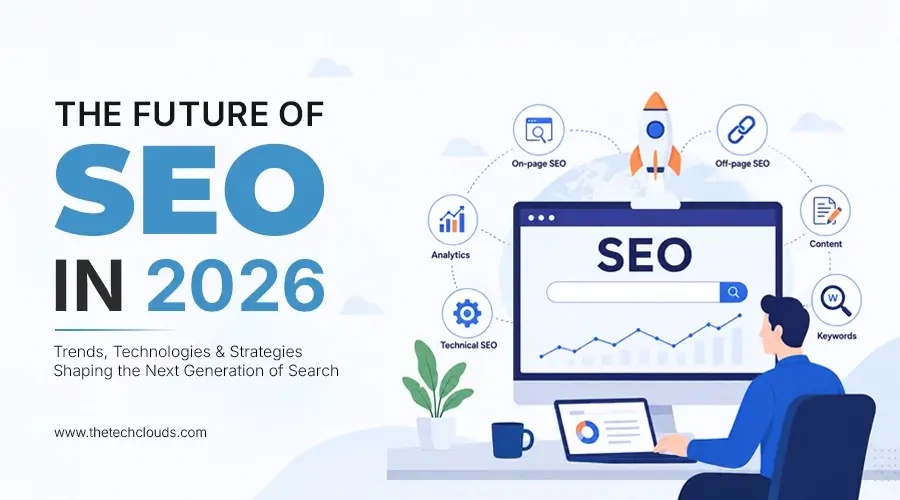
The Future of SEO in 2026: A Complete Guide to AI Search, User Intent, and Organic Growth
Your brand was coming among the top 5 SERP results last year, but now you’re struggling to maintain that. Google algorithms are constantly changing, and your competitors who are following...

Ultimate Guide to E-commerce Development in 2027
Online shopping is growing faster than ever. People buy everything while staying in the comfort of their home. Some deliveries take a few days, whereas others take a few seconds....

Why UX Matters for SEO in 2026
SEO is no longer confined to tweaking keywords and On-site optimization. It's now going beyond that. UX, the User Experience, starts holding the ground, slowly, still strong. It is now...

Top Bagisto Performance Tips for Faster Ecommerce Stores
After working on 3+ prestigious Bagisto projects, we can say that Bagisto gives a competitive edge to brands. It comes with thousands of built-in performance features. With some simple optimization...
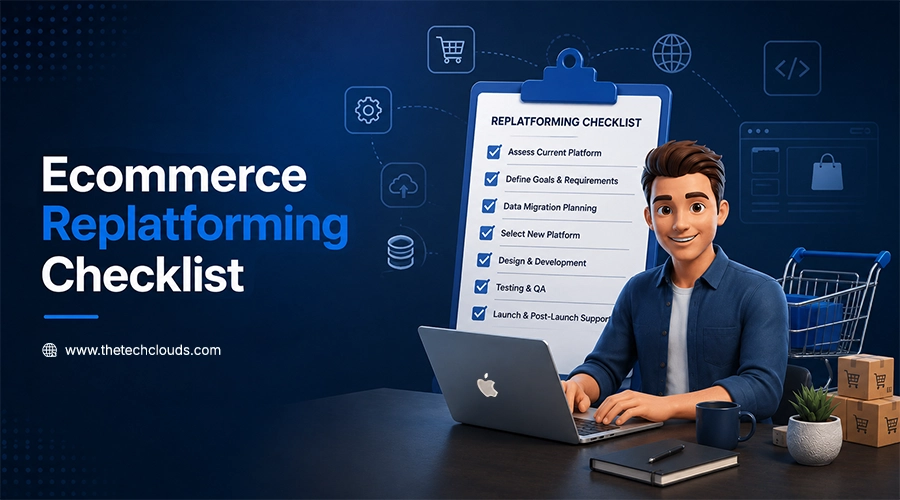
Complete Ecommerce Replatforming Checklist: Steps for a Successful Migration
Switching completely from one store to another is a big decision. A well-planned eCommerce replatforming process is essential to boost performance, speed, and sales. This method future-proofs your business and...

What is Ecommerce Replatforming: A Detailed Guide
The e-commerce landscape is evolving at an unmatched speed to meet customer expectations. Global eCommerce sales are projected to exceed $8 trillion by 2027. This is why shifts drive brands...