


Ultimate Guide to E-commerce Development in 2027

Online shopping is growing faster than ever. People buy everything while staying in the comfort of their home. Some deliveries take a few days, whereas others take a few seconds. That’s why the e-commerce market is continually rising, expected to reach $7.5 trillion by 2026. Don’t think it will stop here. The number will keep rising. Mainly because everyone uses mobile phones nowadays and constantly shops on them. It becomes a new normal.
So, if you’re dreaming of creating an online store, it’s the right time to act.
This ecommerce development guide in 2026 walks you through every step- from the first planning session to the launch day.
Let’s jump in.
Key Takeaways:
- Choosing the right e-commerce platform saves you time, money, and a lot of unnecessary headaches down the road.
- Mobile-first is not a trend anymore; it is simply the standard every store has to meet.
- Good design is not decoration; it is what turns a casual browser into an actual paying customer.
- E-com websites’ security is not optional; one data breach can destroy the trust you spent years building.
- Technology keeps moving forward, and the stores that adapt early will always stay ahead of the ones that wait.
What is E-Commerce Development?
Before understanding eCommerce web development, first understand what eCommerce is. E-commerce is the process of buying and selling products and services online. A brick-and-mortar store is not open 24/7. But an online shop is open to you around the clock. Even if you want to complain about something, you can do that day and night. Through your online store, you can sell either products or services. Some online stores even act as middlemen for Amazon and Flipkart, selling products they don’t own. It connects buyers to some third-party sellers.
Now, how can you develop this?
During e-commerce development, you can create an online store or website to sell your products or services. It’s a series of steps that includes:
- UI/UX design.
- System integration.
- Backend coding.
- Secure payment integration.
- Speed and performance tuning.
- Upgraded security and conversion rates.
- Ongoing support and extensibility.
Only the right eCommerce website development company will help you set up an online store that provides a frictionless shopping experience for customers and generates higher ROI.
Types of E-Commerce
| Type | Examples |
|---|---|
| ECommerce Store | Nike, Zara |
| Online Marketplaces | Amazon, eBay |
| MCommerce Apps | Shopify Mobile Apps |
| Subscription Platforms | SaaS, Subscription Boxes |
Business Models
- B2C- Brands sell directly to the end customer.
- B2B- One business sells to another business.
- C2C—Customers sell to other customers.
- D2C—Manufacturer sells directly, no middleman.
- Dropshipping—Sell without holding any stock yourself.
- Wholesale- Bulk selling at discounted rates to retailers.
Top Platforms in 2027
Choose the right eCommerce platform for eCommerce web development. It will help you store your product and customer information safely and securely. Many options are available in the market nowadays but select one, keeping scalability, security, and budget in mind.
- Shopify: Easy to use, massive app store, strong omnichannel selling across web, mobile, and in-store.
- WooCommerce: Free WordPress plugin, great for blog writing, best for teams that want full control over their store.
- Magento: Built for large businesses with complex needs and high product volumes.
- Medusa: Medusa eCommerce is an open-source, headless commerce and developer-friendly. Ideal for stores in which customization, security, and expandability are top priorities.
- Bagisto: An open-source Laravel-based platform ideal for businesses looking for a lightweight, highly customizable solution with low licensing costs.
If your current eCommerce platform creates issues, go through this complete eCommerce replatforming checklist. It will help you switch your store according to your requirements.
When to Choose Custom E-Commerce Development
- When you need ERP and CRM integrations.
- When your business processes $1M+ in GMV per year.
- When you want to build a multi-vendor marketplace with custom seller workflows.
- When you need full ownership of your code, data, and infrastructure.
These are some solid reasons to choose custom eCommerce solution.
7-Step Development Process
Step 1: Define Goals & Audience
First, select a suitable niche. Then start planning how you can present them to your customers. Demonstrate their age, habits, preferences, and problems that you are going to solve. Clear business goals help you stay focused and plan strategies that deliver real outcomes.
Step 2: Choose Your Platform:
Medusa, Magento, Shopify, WooCommerce, and Bagisto are some top-rated eCommerce platforms. Select one of them based on your budget, SEO requirements, and your technical team’s capabilities. Pick one scalable platform that must grow along with your business. If you’re already facing issues with your current platform, you should consider eCommerce replatforming to improve performance.
Step 3: Domain & Hosting
Choose an eye-catching, unique domain name that appropriately reflects your brand. Even a single second of downtime can cost a ransom. Invest in a hosting solution that offers fast loading speed and strong uptime. Also, check out whether it provides responsive customer support when things go wrong. A successful e-commerce website should have a well-organized site, strong data security, and a smooth checkout process. Proper domain and hosting services deliver all of these.
Step 4: UI/UX Design Services
Once a survey was held by The Tech Clouds (TTC), a renowned e-commerce web development company. In that survey, our research analyst asked questions to 100 people. What do they mainly focus on in a website? 25% of customers state they notice whether the website loads within a second. 20% focus on smooth navigation and checkout process, and the other 15% feel confused when the navigation is complex. Lastly, 40% of them order from mobile. suggest. Thus, they hardly open their laptops to order something. So, mobile-first design is a must. Thus, our team recognizes that in 2026, UX directly affects SEO.
Step 5: Add Products
Organize your products into clear categories so customers can find them easily. When our developers built previous e-commerce stores, they found that including AR/virtual reality technologies helps customers better understand the products. Also, write natural, easy-to-understand product descriptions or service content so people understand them without getting frustrated.
Step 6: Payment & Shipping
Integrate trusted payment gateways such as PayPal, Stripe, and Razorpay to ensure customers have a fluid transaction experience. Also, provide multiple payment methods. Some purchase using their cards or through UPI ID, whereas others still prefer COD (cash on delivery). Forget including digital wallets or services like Buy Now, Pay Later, as it leaves you behind in this competitive world. Also, offer clear information on shipping rates, delivery zones, and return policies so customers can buy with confidence, not confusion.
Step 7: Launch & Optimize
After building each block, thoroughly test it with your software testing teams. Are there any broken buttons or payment errors? Does the website look perfect on every digital screen? When you’re sure about your website, make a public announcement through social media, email campaigns, and paid ads. This step helps you drive traffic from day one. Track performance using Google Analytics and use that data to keep improving your store week after week.
Key Features for 2027 E-commerce Website
Customer-Centric Features
AI-Powered Search & Personalization:
Over time, your website comes to know your customers and their choices. It’s high time to leverage AI functionalities to analyze your customer demands and preferences. Moreover, they send personalized emails and messages to your customers. Due to this feature, customers are drawn to your websites, feeling valued and heard.
Shopping Cart & Guest Checkout:
Every customer wants a frictionless shopping experience, and this should start with a smooth checkout. When they love one thing, they add it to their cart and proceed to pay, only to be interrupted repeatedly. Then they left your website and never returned. To resolve this issue, have your technical team check them daily. Because a single stumble block in a buyer’s checkout paths drives them away forever.
Multiple Payment Options:
Every person has a unique transaction choice. Let them experience their best. Include multiple payment options such as UPI ID, COD (cash on delivery), Buy Now Pay Later, EMI facilities, and Debit & Credit cards. This step provides convenience for buyers, and when they are happy, they buy frequently from your store.
Order Tracking & Review Facilities:
When customers order something, they often check frequently to see when it will be delivered. That’s why you should integrate order tracking and review features. As soon as you receive an order, send the tracking link to your customers so they can see its progress. This approach boosts confidence and trust in them.
Business-Centric Features
Product & Inventory Management:
You receive an order, and when you go to allot it, you see the item isn’t in inventory. This can significantly affect customer satisfaction, and once they are hurt, they are less likely to return to your store. Leverage real-time stock updates to keep your inventory in sync and notify you of what’s in stock and what’s not.
Marketing Tools:
Hire an experienced eCommerce marketing team who can create built-in promotions, discount codes, and loyalty programs. When you include these, you can see better sales outcomes.
Order Processing & Returns:
The customer ordered one thing, but it didn’t meet their expectations, so they returned it. It’s common. But trust erodes when the return process is overwhelming. Repeated calls to customer care for returning the product and delays in refunds drive your customers away.
Analytics & Reporting:
Choose the right eCommerce development company that provides data on sales, traffic, and customer behavior. Using this information, you can make better business strategies.
Critical Requirements
Security (SSL, Encryption):
Ecommerce websites are favorite spots for hackers. Security against cyberattacks is crucial to protecting customers’ data and business information.
Mobile-First Design:
79% of shoppers buy on mobiles. So, mobile-first designs are not trivial nowadays. It’s the most important factor in propelling sales.
Fast Loading Speed:
If a website doesn’t load within 3 seconds, users leave and never come back. Use highly optimized images and CDNs to speed page load times.
SEO-friendly Structure:
Hiring SEO experts is no longer optional when you’re targeting high visibility and better rankings. They help you remove broken URLs, add proper meta tags, and include high-search-intent keywords.
2027 Design Trends
The days of only aesthetic designs have gone. It’s time to invest in a responsive, intuitive design that increases user satisfaction and prepares them to act.
Here are 7 design trends that will shape the ground of 2027:
Bento Grid Layouts:
Modular, box-based design gives an organized look. Customers easily understand your products and services and feel confident about the next step.
Dark Aesthetics & High Contrast:
People like to read content with a black background. It’s soothing to the eyes, which is why they like to spend more time on that page. Use a contrasting color to highlight the product features to make a lasting impression.
Scrolly-Telling:
Scroll-triggered animation brings your products to life. This approach can turn passive browsing into a long-term buying journey.
Micro-interactions:
Use tweaking buttons, hovers, and confirmations. All these features create unforgettable memories for buyers, making them genuinely feel valued.
Green UX:
Sustainability is coming into every sphere, including e-commerce. You will definitely fall behind in the e-commerce landscape if you do not build fast and energy-efficient websites in 2027. Include lightweight pages, optimized code, and sustainable hosting to gain a competitive edge.
Top Tech Trends Shaping E-Commerce
Technology is moving faster. If you’re planning to start an e-commerce business from scratch, you should incorporate these features. Otherwise, you’ll fall behind.
Here’s what leads the charge in 2027:
AI & Machine Learning:
AI E-commerce is expected to reach $17.1 billion by 2030, underscoring its growing importance in driving sales and customer satisfaction. Include predictive personalization for product recommendation and AI chatbots to handle customer queries.
Headless Commerce:
73% of businesses have already adopted headless architecture, where the front-end is not tightly coupled with the back-end, giving you greater flexibility and control.
Voice Commerce:
People not only use their voices to search for things on search engines, but they are also finding this feature in e-commerce stores. Include voice SEO and conversational AI agents to make the buying journey smooth and frictionless.
AR/VR Integration:
AR means augmented reality. It tells customers what your product will look like in reality.
VR means virtual reality. It makes customers feel like they are present in a shop right then. A real-time, entire virtual experience.
m-Commerce:
Mobile eCommerce is now a $2.2 trillion market. It’s not yet confined, though. Uprising each day. That’s why built an eCommerce store with a mobile-first design from the very first day.
Top 5 Challenges & Their Respective Solutions
| Challenge | Solution |
|---|---|
| Low Conversion Rates | Simplify checkout, offer discounts, and work with experienced eCommerce developers who know what drives buyers to act. |
| Security Concerns | Implement SSL certificates, trusted payment gateways, and end-to-end encryption across the entire store. |
| Mobile Optimization | Build with a mobile-first approach from day one and use touch-friendly buttons and layouts throughout. |
| Poor UX | Invest in professional UI/UX design and use real data analytics to understand where users are dropping off. |
| Platform Choice | Match your platform carefully to your business size, budget, technical needs, and long-term growth plans. |
Have an e-commerce challenge? Let’s solve it together!
Closing Thoughts
E-commerce strategies that you implemented a year ago will not run in 2027. The entire e-commerce website development process has been changed. Better open-source e-commerce platforms have come. New features such as AI personalization, order tracking, and inventory management need to be included. Design trends are no longer limited to aesthetics; they are more about creating memorable experiences. Including emerging technologies such as AI/ML, AR/VR, and voice commerce is no longer optional. They have become mandatory. Read this ultimate ecommerce development guide in 2026 and plan for most awaited eCommerce store in 2027.
If you don’t leverage them now, you will fall behind. How do you do that efficiently?
The Tech Clouds (TTC) is the answer. We are a renowned eCommerce web development company, offering comprehensive, custom-to-off-the-shelf eCommerce solutions to businesses and helping them outshine their competitors. Reach out to us today and make your ecommerce brand the customer’s first choice!

Frequently Asked Questions
How long does it take to build?
A simple store takes 2 to 4 weeks. A fully custom build with complex features can take 3 to 6 months depending on scope.
Shopify vs. Custom — which is better?
Shopify suits small to mid-sized businesses needing a quick launch. Custom development works better when your business has unique needs Shopify cannot handle.
Which is better — Bagisto or Magento?
Bagisto vs. Magento is often a perplexing topic. Choose Bagisto when you want lighter, faster, and easier to manage growing stores. Magento suits large enterprises needing deep customization and high-volume order handling.
How do I find the right ecommerce development company?
It is a question if many people how to choose a trusted eCommerce development company. Look for proven experience, a strong portfolio, and clear communication. The Tech Clouds (TTC) is a reliable choice with end-to-end ecommerce development expertise across multiple platforms.
Recent Posts






Related Blogs
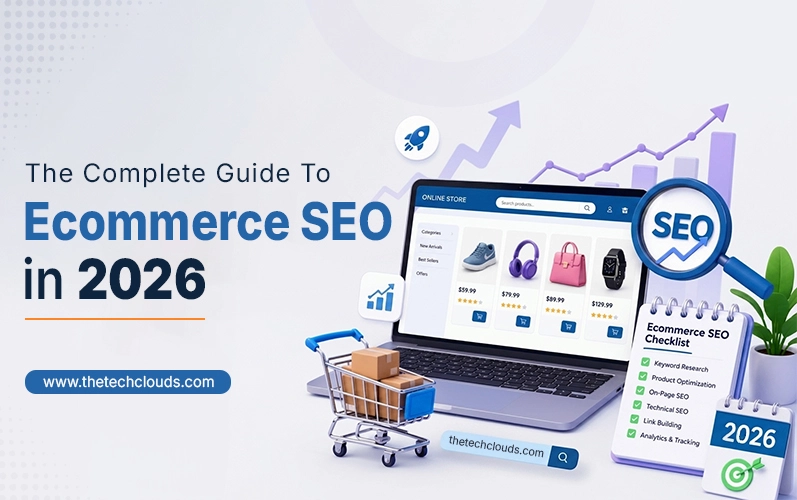
Ecommerce SEO Strategies to Rank Higher in 2026
You are running your online store, but whenever customers search for something, it doesn’t show up. As a result, you’re losing sales and failing to generate revenue. How can you...
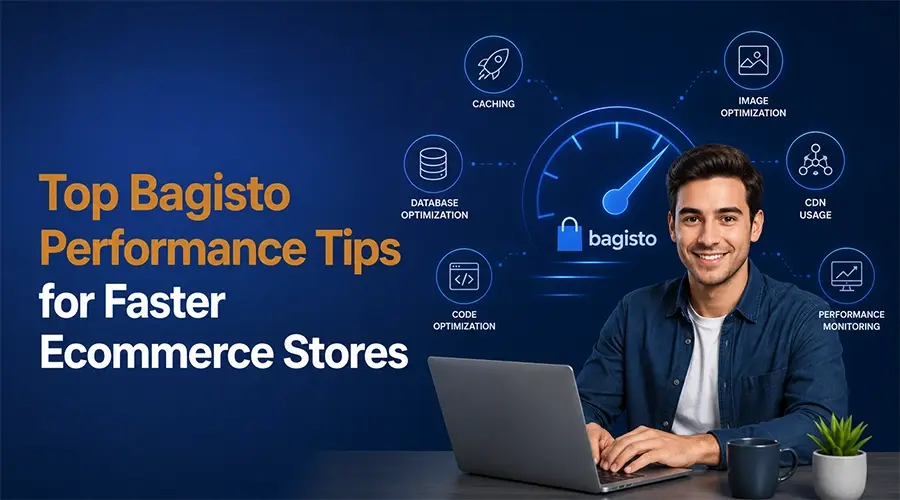
Top Bagisto Performance Tips for Faster Ecommerce Stores
After working on 3+ prestigious Bagisto projects, we can say that Bagisto gives a competitive edge to brands. It comes with thousands of built-in performance features. With some simple optimization...
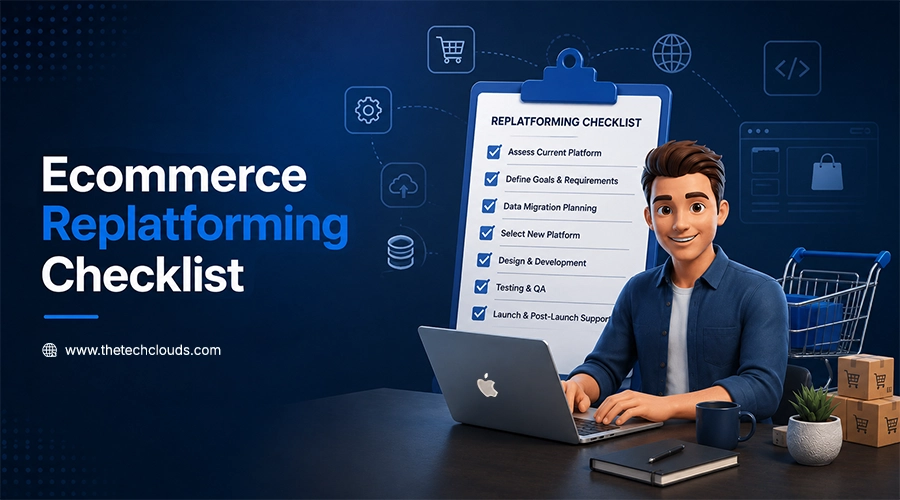
Complete Ecommerce Replatforming Checklist: Steps for a Successful Migration
Switching completely from one store to another is a big decision. A well-planned eCommerce replatforming process is essential to boost performance, speed, and sales. This method future-proofs your business and...
What is Ecommerce Replatforming: A Detailed Guide
The e-commerce landscape is evolving at an unmatched speed to meet customer expectations. Global eCommerce sales are projected to exceed $8 trillion by 2027. This is why shifts drive brands...

Which E-commerce Platform Boosts SEO the Most?
SEO is the driving engine of an online store. Studies show that over 68% of online experiences start with a search engine. This means your platform must support strong SEO...

How to Secure Your Ecommerce Website Against Cyber Attacks
Providing services and selling products through an eCommerce website is really exciting. But with excitement, responsibility comes hand in hand. Threats are constantly evolving in this era. At this moment,...

How to Choose the Best Enterprise eCommerce Platform in 2026
The e-commerce market is increasing rapidly. At this stage, many businesses are finding the right enterprise e-commerce platforms to start their own digital store. But in 2026, the competition is...

Top 8 Best Open-Source Headless E-Commerce Platforms
Open-source eCommerce platforms are dominating today's online shopping industry with all their might. This is one of the heated discussion topics in today's time. Wonder why? Because with these headless...